


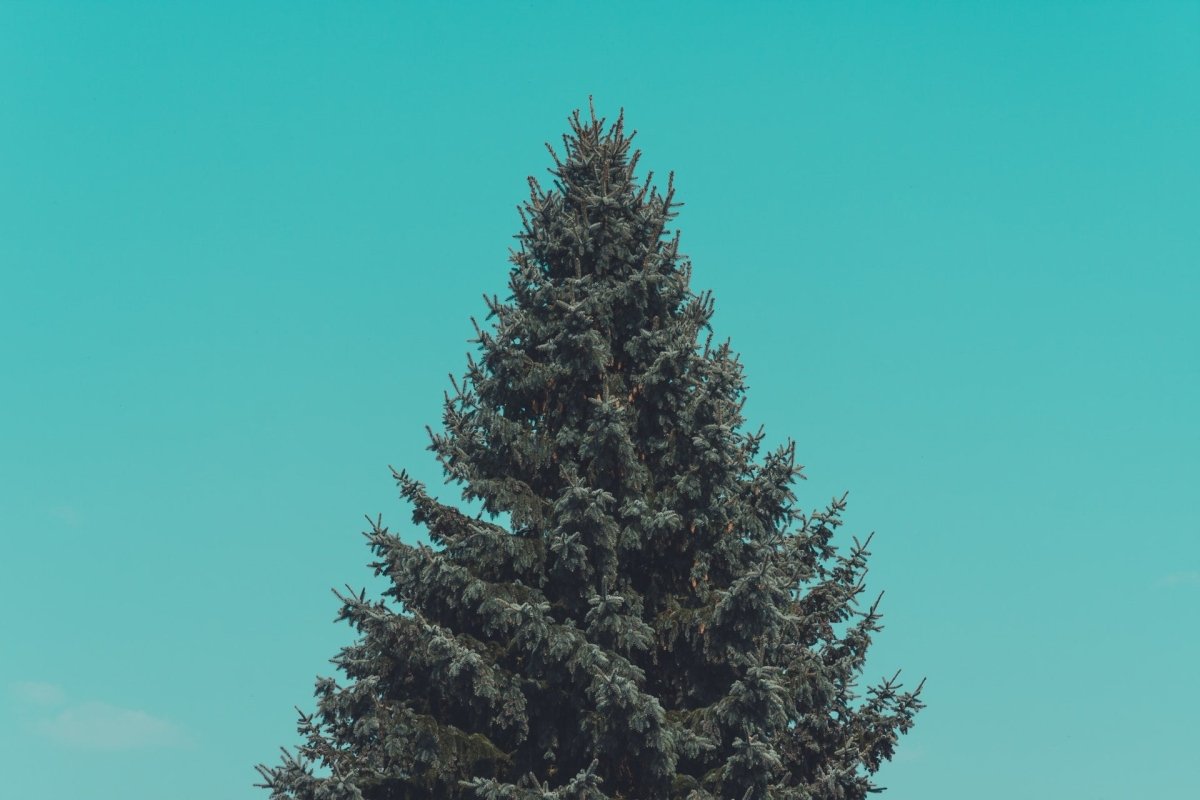
In winter, the mostly evergreen conifers (so named because they bear cones) are often the only greenery beneath the snow. This vitality during the cold season is probably one of the reasons why the Christmas tree is a conifer. But which conifers are truly native to our country, and where do they thrive best? Learn more about our native Swiss conifers now!
PS: If you'd like to plant trees yourself and give something back to the forest, sign up now for the NIKIN TreePlantingDay on November 30th!

Which native conifers are truly “Swiss”?
The biodiversity of Swiss conifers is not entirely due to nature. Many species became extinct during the last Ice Age and are now being reintroduced due to their decorative appearance, such as the giant sequoia. Others were never found on the Old Continent and are truly exotic "immigrants," such as the Chilean monkey puzzle tree . Therefore, the native Swiss conifers among the 500 million trees in the Alpine republic are presented here.

Fir (Abies)
There are over 40 species of fir known worldwide, but in Switzerland the silver fir or Abies alba is predominant. This conifer, which also forms the NIKIN logo, is easy to distinguish from the spruce – a glance at the cones is enough. In firs, these stand upright on the branches, while in spruces they hang. The needles are also much softer. The silver fir, which prefers warmth, is found in the foothills of the Alps, in the Jura and the Swiss Plateau, and partly in Valais. Because the tree depends on a good water supply and temperatures that are not too cold, it thrives best at altitudes between 800 and 1000 m above sea level .

Norway spruce (Picea abies)
The spruce is the "top dog" among European conifers. It predominates in populations, especially in lower-lying regions. Higher up the slopes , spruce trees have been heavily logged in subalpine regions and replaced by regrowing larch trees. In Switzerland, spruce trees can be found throughout the country, including on the southern slopes of the Alps. Although the tree initially looks very similar to a fir, a quick touch of its branches is enough to distinguish them: spruce needles are extremely hard and pierce unpleasantly into the skin. The cones, unlike pine cones, hang.

Scots pine (Pinus cembra)
The pine, also known as Swiss stone pine, thrives equally well in acidic soils as it does at high altitudes . The tree can be found at over 2,500 meters above sea level and is easily recognizable by its characteristic, long needles. The needles are grouped in clusters on the branches and give pines their distinctive appearance. The population in Switzerland has suffered greatly over the centuries because the wood is a sought-after commodity.
[ product-handles list="treebottle-glass-allover-pines, treesocks-standard-single, folded-polylana-r-ripped1, treesweater-basic-unisex, treeglasses-round"]
Larch (Larix decidua)
Larches are among the few conifers whose needles change color in the fall and are eventually shed. This makes larch stands on mountain slopes in October an impressive sight. The larch is a relatively undemanding tree that thrives at all altitudes – the most important requirement is ample light. This is why larches are spreading wherever other trees are being felled— in Switzerland, the rate has recently increased by twentyfold.

Yew (Taxus baccata)
The yew tree owes its Latin name to the wood's suitability for making bows and crossbows – this fact is also responsible for the sharp decline in populations. Thanks to a change in thinking, the tree is now being promoted again, and in domestic gardens, its glossy green needles and bright fruits make it popular as a woody plant, for example, for hedges. Yew trees do not secrete resin, and handling the wood does not stain clothing, but virtually all of the tree's components are highly toxic. They contain the highly toxic substance taxine, which is fatal even in the smallest doses. Only the flesh of the decorative red berries is non-toxic.

Juniper (Juniperus)
Juniper bushes can also thrive as low to medium-sized trees under favorable conditions, similar to the yew tree. Juniper thrives worldwide but struggles to compete with other plants. Therefore, it is predominantly found in dry, rocky areas and heathlands. The berry-shaped cones take three years to fully ripen and eventually turn bluish. They are valued both as a spice and in spirits production.

Speaking of trees, learn more about our TreePlanting commitment here. You might also be interested in the TreeTracker . If you've already ordered from us, you can use your order number to see where your tree was planted.


