


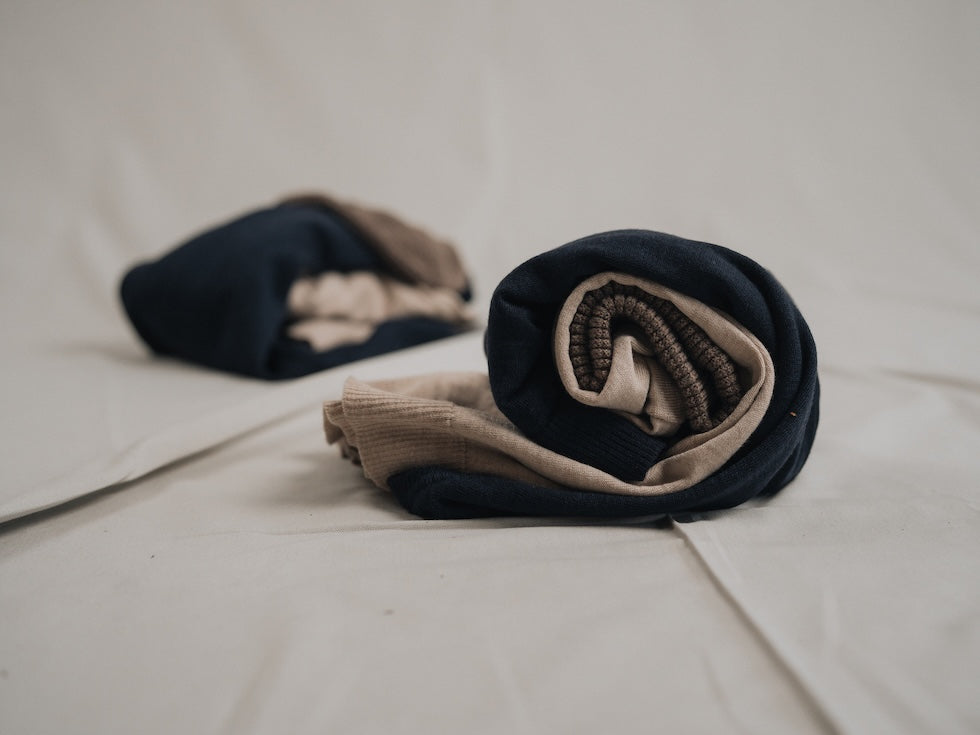
Why is clothing made from natural fibers sustainable?
Natural fibers come from plant or animal sources and are biodegradable. This means that after their life cycle, they decompose naturally without leaving behind microplastics or pollutants. Synthetic fibers like polyester, on the other hand, are petroleum-based and release microplastics into our waters when washed. Many natural fibers also perform better than synthetics in terms of production: they generally require less energy and cause fewer CO₂ emissions. Choosing clothing made from natural fibers and caring for it properly means opting for durable materials that are good for both the environment and the skin.

Natural Fibers at NIKIN at a Glance
There are many natural fabrics that are excellently suited for clothing, and each fiber brings its own advantages. We also rely on selected natural materials for many of our products that fit our sustainability standards:
- Organic Cotton: Our most used natural material is still organic cotton. You can find it in our TreeShirts, TreeSweaters or even TreeJogging Pants. It is particularly important to us that it is certified organic (kbA). Organic cotton is soft, skin-friendly, breathable and grows without synthetic pesticides or fertilizers. It is easy to care for and ideal for everyday wear.
- Linen: Used selectively at NIKIN, especially in summer collections. The fiber is obtained from the flax plant and convinces with cooling, breathable properties and natural robustness. Linen also has antibacterial properties and a characteristic lightly textured look.
- Wool (Merino Wool): Recently added to NIKIN's range – in the form of RWS-certified merino wool. This particularly fine type of wool is soft, temperature-regulating and odor-neutral. Ideal for transitional and winter clothing, especially for active people. You can find out why we have now included merino wool in our material range in the second part of this blog series.
- Hemp: Used occasionally at NIKIN, especially in blended fabrics. Hemp is one of the most environmentally friendly natural fibers, as it requires little water and grows entirely without pesticides. The fiber is tear-resistant, durable and has natural antibacterial properties.
- TENCEL™ (Lyocell): A modern plant-based cellulose fiber – mostly from eucalyptus – used at NIKIN in selected products. It is soft, breathable, moisture-regulating and fully biodegradable. Production is particularly resource-efficient in a closed-loop system.
- Cork: At NIKIN, cork is mainly used in accessories such as TreeCaps. Cork is lightweight, water-repellent, durable and is extracted from the bark of the cork oak – without felling the tree. An innovative plant-based alternative to leather or plastic components.
Further examples of natural fibers used in the clothing industry, but not at NIKIN, are cashmere, silk, leather, alpaca or camel hair. You can find a complete overview of all materials we currently use at NIKIN in our material list.

What Natural Fibers Can Do and Where They Reach Their Limits
Natural fibers have many advantages – especially for the environment. But they are not a miracle material. As with all materials, it depends on the right use, care and mix. We show you where they are superior to synthetic fibers and where they reach their limits:
Advantages:
- Biodegradable: Natural fibers decompose naturally without leaving harmful residues. This is a big advantage over synthetic fibers, which often release microplastics and do not decompose for centuries.
- Breathable and skin-friendly: Materials like organic cotton, linen or merino wool ensure a pleasant feel on the skin and natural temperature regulation. Ideal for sensitive skin or changeable weather.
- Mostly more durable than synthetic fibers: High-quality natural fibers last many years with good care. Especially wool and hemp are robust and retain their shape and function even after frequent wear. This means fewer new clothes need to be bought.
- No microplastics when washing: Unlike synthetic fibers, no synthetic particles enter the wastewater during washing.
Disadvantages:
- Sometimes more care-intensive: Natural fibers react more sensitively to heat or aggressive detergents. Especially wool or linen require special care to stay beautiful for a long time. It is therefore worthwhile to check the care instructions before the first wash.
- More prone to wrinkling: Some plant fibers wrinkle faster than synthetic fabrics. While this is a natural look, it sometimes requires a little more ironing.
- Not always as elastic as synthetic fibers: Natural materials often offer less elasticity. For close-fitting or sporty cuts, elastic fibers are therefore often added – mostly elastane, which is petroleum-based.

How to Properly Care for Natural Fiber Clothing
To ensure that clothing made from natural fibers stays beautiful and you can wear it for a long time, you should check the care instructions before the first wash. Most natural fibers do not tolerate unnecessary heat and aggressive detergents. With a few simple tips, you can prevent your clothes from fading, discoloring or deforming:
- Less is more: Clothing made from natural fibers does not have to be washed after every wear – often thorough airing is enough. Since many natural fibers are breathable, they also don't smell as quickly. Washing less protects the material and saves water and energy.
- Gentle cycle & mild detergent: Wash your clothes at low temperatures on a gentle cycle. It is best to use an ecological, mild detergent and avoid fabric softener, as it can stress the fibers.
- Air drying instead of tumble dryer: Ideally, dry your clothes in the air. The tumble dryer can unnecessarily strain natural fibers and cause them to shrink. Caution is particularly advised with wool: it should always be shaped when wet and dried flat so that it retains its shape.
For each product, you will also find individual care instructions in the online shop – tailored to the material and processing. If you are unsure about the care of a specific material, you can also find information on Clevercare. There you will find detailed tips on how to care for your clothes sustainably and gently so that they stay beautiful for a long time.
Natural Fibers – a Natural Step Towards a More Sustainable Future
Clothing made from natural fibers is more than just a trend. It is an important step towards conscious consumption and sustainable fashion. Whether organic cotton, linen or merino wool – clothing made from natural fibers is a central building block on the way to more sustainability in your wardrobe. At NIKIN, we therefore specifically rely on natural fibers that meet our quality and sustainability standards, and we want to offer you even more choice with our entry into the world of wool.
If you are interested in this topic in more depth, we recommend the documentary "The True Cost" – an impressive look behind the scenes of the fashion industry and the impact of our clothing choices on people and the environment.
FAQ about Natural Fibers
Natural fibers are fibers that come from plant or animal sources, for example cotton, linen, hemp or wool. They are biodegradable and have been used for clothing for thousands of years.
Natural fibers are biodegradable, do not cause microplastics and usually require less energy in production than synthetic fibers. Many natural fibers such as organic cotton or hemp can also be grown without pesticides.
We mainly focus on certified organic cotton. In addition, hemp, linen, TENCEL™ (Lyocell) and cork are used. We have also recently started offering initial products made from RWS-certified merino wool.
That depends on the purpose: cotton is easy to care for and versatile, linen is ideal for hot summer days, hemp is very robust, TENCEL™ is soft and breathable. Merino wool is particularly suitable for cooler temperatures and outdoors.
Natural fibers are breathable, comfortable on the skin, durable and biodegradable. They do not release microplastics when washed and provide high wearing comfort.
Yes, some natural fibers are more care-intensive, wrinkle faster (e.g. linen) or are less elastic than synthetic fabrics. However, with the right care, these disadvantages can be easily offset.
Don't wash too often, air instead, use a gentle cycle, use mild detergent, air dry and store properly. This way the clothes stay beautiful for a long time.
Synthetic fibers such as polyester, nylon or elastane. They are petroleum-based, not biodegradable and release microplastics when washed.
Because animal welfare is very important to us. These materials are often problematic to obtain. That's why we deliberately avoid them and mainly rely on plant-based natural fibers and responsibly certified merino wool.


