


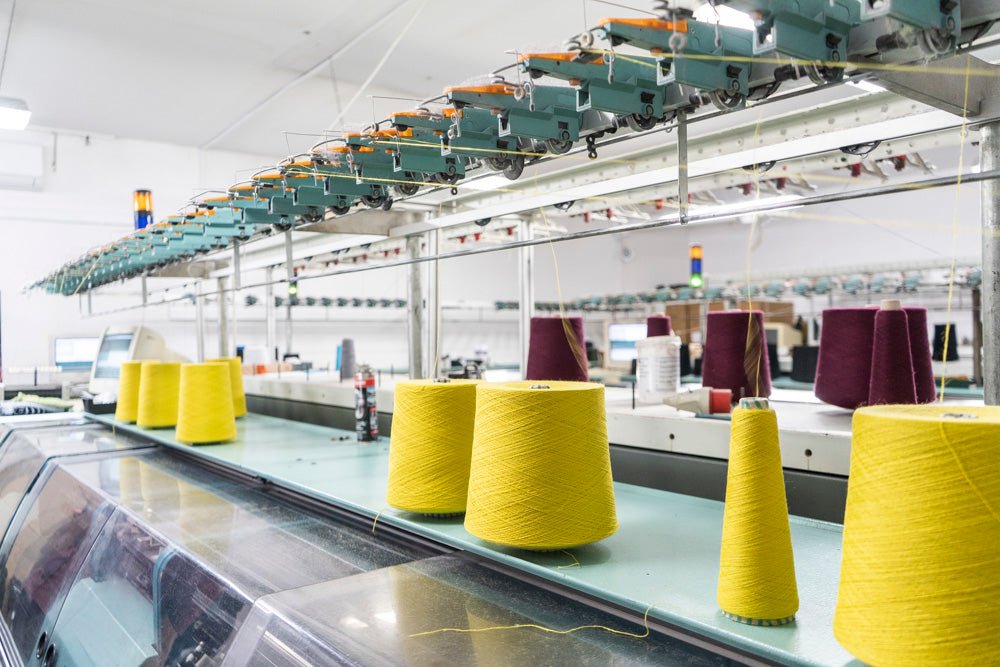

Our goal is to find the perfect balance between sustainability and affordability. To achieve this, we are always looking for the most suitable materials for our products. We have high standards for our producers and their fabrics. For example, it is essential for us that the material is vegan. Natural fibers derived from animals, such as sheep's wool, are therefore out of the question for us.
The advantages of synthetic fibers
We use natural materials in our products as often as possible. However, there are products that are not (yet) made from natural fibers that still meet our standards. Our reasons for using synthetic fibers are varied, and we've listed some of them for you:
- Synthetic fibers are durable. We believe it's unsustainable to produce products from natural fibers that become unwearable after just a few washes. We want our customers to enjoy their products for as long as possible.
- Synthetic fibers are warmer than cotton, for example. Our Treeanies are made of synthetic fibers – except for the recycled version. This is partly because a winter hat needs to keep the ears warm, which synthetic fibers are much better at than, for example, cotton.
- We've conducted various experiments with natural fibers. However, some products only meet our quality standards when made from synthetic fibers. A product made from natural materials but not meeting the desired quality will not be included in our range.
- It's very important to us that our products are produced in Europe. However, many European manufacturers are still stuck in outdated ways of thinking. Sustainability is less important to them. This makes it all the more difficult for us to find a producer who produces high-quality, affordable products made from natural fibers in Europe.
- Synthetic fibers can be dyed with little effort. This gives us more flexibility when it comes to inventory levels. This is one of our measures to minimize excess inventory. We believe it's unsustainable to produce in large quantities and then let products gather dust in the warehouse.
Co-founder and head of the product team Robin explains in the video what our Treeanies are made of and what demands he and his team have on materials.
Where does our path lead?
Our product team is constantly searching for even better solutions. They also stay on top of sustainable, affordable, and natural materials. The textile industry is one of the dirtiest businesses in the world. It's therefore incredibly difficult to find sustainable, European manufacturers for our products. But Robin and his team aren't giving up. They want to make the products even more sustainable and natural – while always keeping them affordable.
What can you contribute?
You decide for yourself which definition of sustainability you apply. Is longevity particularly important to you? Do you want to avoid synthetic fibers in your products? Do you value European production facilities? Everyone is entitled to a different definition of sustainability. But what we would like to emphasize to you is that NIKIN is not about the individual tree, but about the larger movement. We try to persuade as many people as possible to change their minds. We are confident that together we can have a significant impact and give something back to nature.
Washing synthetic fibers
Clothing made with synthetic fibers releases microplastics into the water with every wash. Therefore, if you wash synthetic products, we recommend the Guppyfriend . It filters out microplastics. Be careful not to wash your products too often or at too high a temperature. Often, simply airing the product out is sufficient.


