


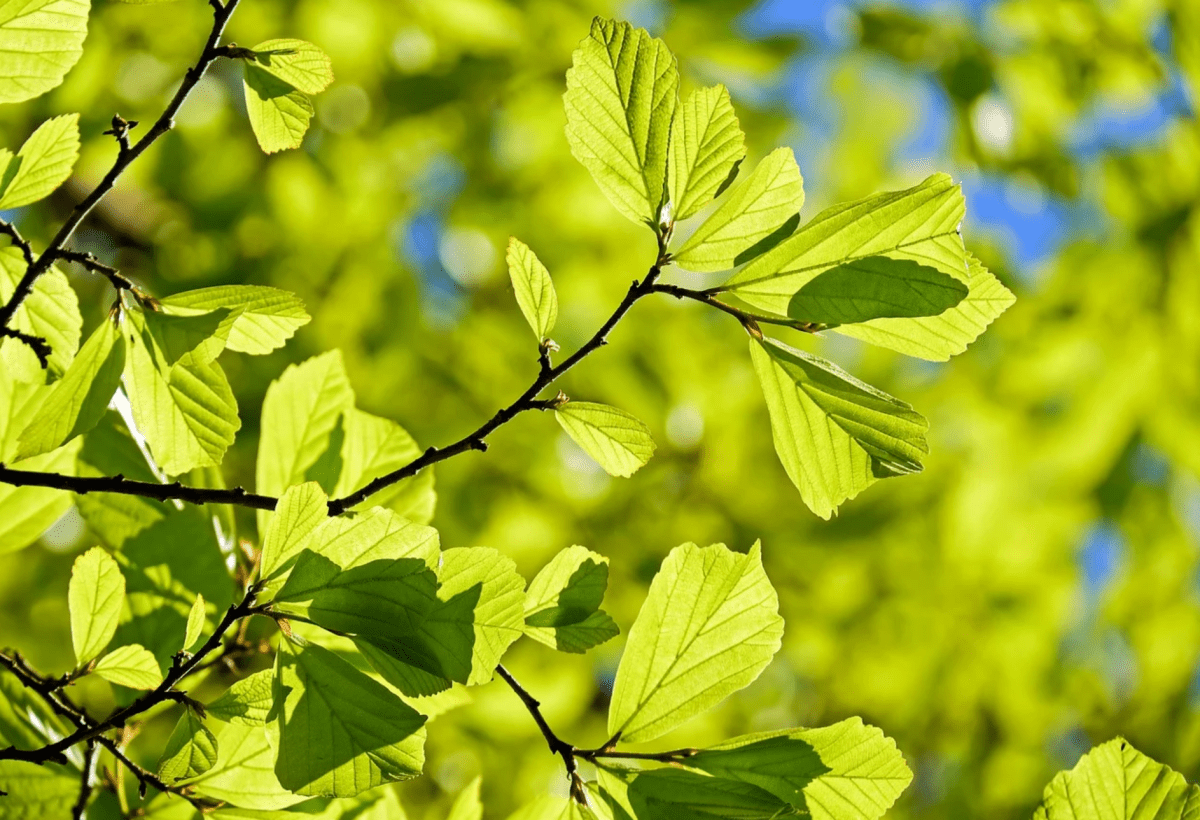
Life on Earth is only possible because of the oxygen envelope surrounding the planet. But our atmosphere is anything but self-evident. After all, oxygen is constantly being consumed. So who ensures that we don't run out of air?

Without trees we would soon run out of oxygen
Exactly – trees, forests, and plants in general. They are not only a habitat in which humans, animals, and other plants thrive, but also ensure the production of oxygen through their hard daily work. At the same time, they remove pollutants from the atmosphere by binding CO2 . This happens through the process of photosynthesis.
What is photosynthesis?
The process of photosynthesis is carried out by plants, but also especially by algae, plankton, and some bacteria. During photosynthesis, light is converted into chemical energy to ultimately create a nutrient-rich substance – glucose. The key factor in photosynthesis is chlorophyll, also known as chlorophyll. This pigment plays an important role in the absorption and conversion of light.

Since chlorophyll is found in the leaves and needles of trees and plants, photosynthesis takes place in these green parts. The captured and converted light is needed to incorporate CO2 into the glucose production process. The harmful carbon dioxide is removed from the environment; conversely, during photosynthesis, the plant releases oxygen as a "waste product." For the tree, the process is ultimately a means of generating nutrients. It needs the glucose to later convert it into starch and thus obtain nutrients.
Power for Oxygen: So much oxygen a single tree produces
It's astonishing how much oxygen a single tree can produce. Depending on its size, and of course the amount of sunlight, trees can produce enough air to breathe for 10 to 50 people. Even at a young age, a single tree absorbs 5-6 tons of carbon dioxide annually! Added to this is the filtering power of trees, which filters dust and other pollutants from the air. That's why breathing deeply in the forest is so good for us. Trees provide this service in abundance, and without us having to take special care of them—in fact, most forests benefit from humans refraining from interfering with nature.
Where does photosynthesis take place on a large scale?
Once you understand how abundant and reliable the oxygen production of plants is, the importance of forests becomes even clearer. However, forests on land are not the largest oxygen producers.
The phytoplankton floating in the oceans also carry out photosynthesis. Researchers estimate that these tiny cells bind at least as much CO2 as all the plants on Earth's landmass – possibly even more. An estimated 50 billion tons of carbon dioxide are removed from the atmosphere each year by this "forest under the sea" alone and converted into oxygen. In addition to binding sinking carbon dioxide in the depths of the oceans, the phytoplankton ensures a huge exchange of CO2 and oxygen in the bright, sunny upper reaches of the oceans – according to some scientists, the entire atmosphere is completely renewed here every six years.

Amazing chemical achievements
Not only the impressive giant trees of tropical forests, but also the barely visible suspended matter in the oceans continue to give us a chance to breathe. To keep it that way, we must contribute to ensuring that our forests are valued, protected, and reforested where necessary. Through our partnership with the organization OneTreePlanted, we at NIKIN are helping to ensure that the world's forests continue to produce oxygen through photosynthesis for our children and grandchildren – and you can do your part, too!


