


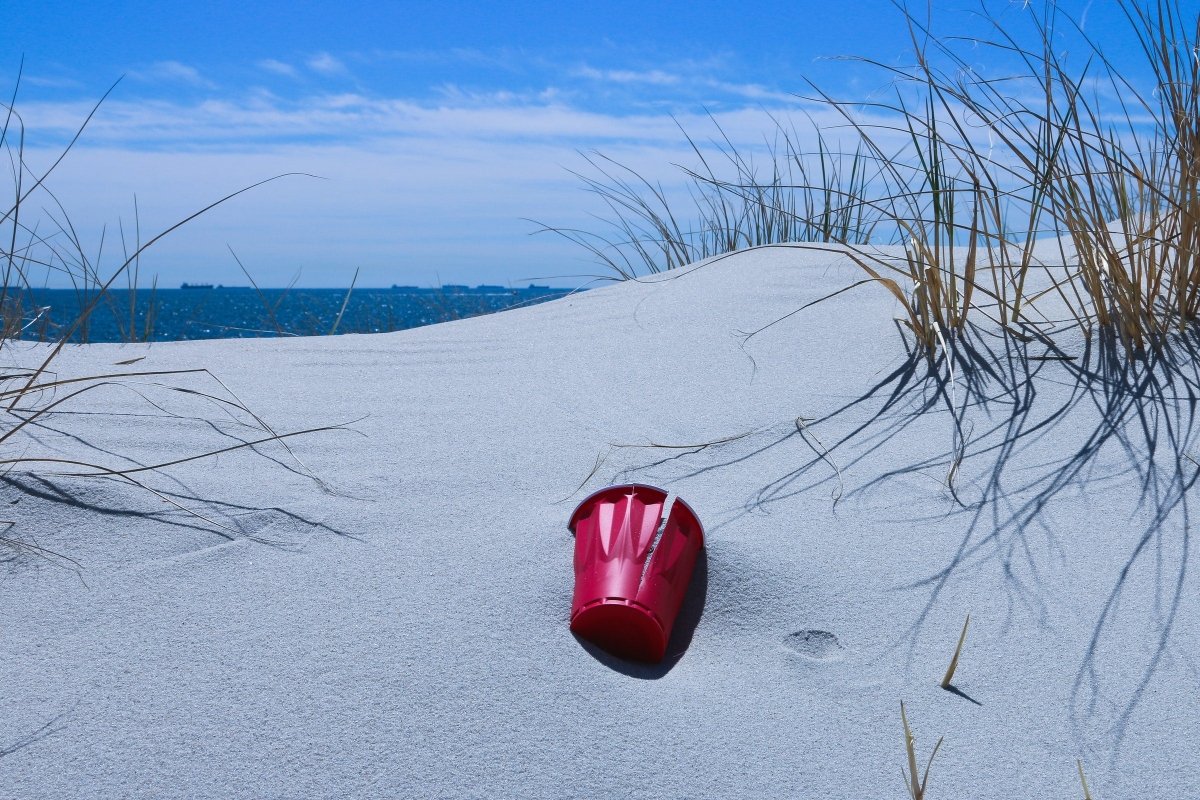
There are situations where plastic can make sense, for example, when it comes to food waste, i.e., protecting food. However, alternatives already exist, such as packaging made from sugar cane waste. Prioritizing these alternatives would make sense: In Switzerland alone , 1 million tons of plastic are consumed annually, and 5,000 tons of plastic enter the environment annually.

Plastic is everywhere
Of the 1 million tons of plastic we consume in this country, 780,000 tons are waste , meaning they are used only once. The rest is used long-term, for example, in building construction. Plastic isn't just packaging waste. It's also found in vehicles, households, agriculture, and electronics. A 2020 study on the topic commissioned by the federal government found that 90% of used waste is incinerated.
[ product-handles list="treebottle, treebottle-glass-allover-pines, treebag-beach-nikin-swim, treevase, treeshopper-single"]
The invisible plastic
While macroplastics are visible and easily removed, invisible microplastics pose a major threat to human and environmental health. Depending on the type of plastic, they can take up to several hundred years to decompose. Macroplastics can be effectively addressed by combating littering and raising public and business awareness. Microplastics, on the other hand, consist of small plastic pieces less than 5 mm in diameter.

Plasticizers reduce fertility
We can't see the tiny pieces of plastic with the naked eye. Caution is especially important when it comes to plastic from packaging and everyday use. Plasticizers, also known as phthalates, are found in many objects, such as toys. Phthalates are suspected of affecting human hormone levels. According to the Federal Office of Public Health (FOPH), this has already been confirmed in animal studies, as microplastics in the animals' bodies reduced fertility. The plasticizer is not chemically bound in the plastic and thus enters the water (e.g., from PET bottles), food (e.g., from cling film), and the skin (e.g., from cosmetics).
Be inspired!
But how can we use less plastic? What might a plastic-free July look like? You can find lots of ideas atPlastic Free July®, as well as on our Instagram throughout the month. We also offer plastic-free alternatives like TreeBags and TreeShoppers, as well as various TreeBottles . We hope the content inspires you and that you, too, can do without plastic here and there. Happy Plastic Free July!


