


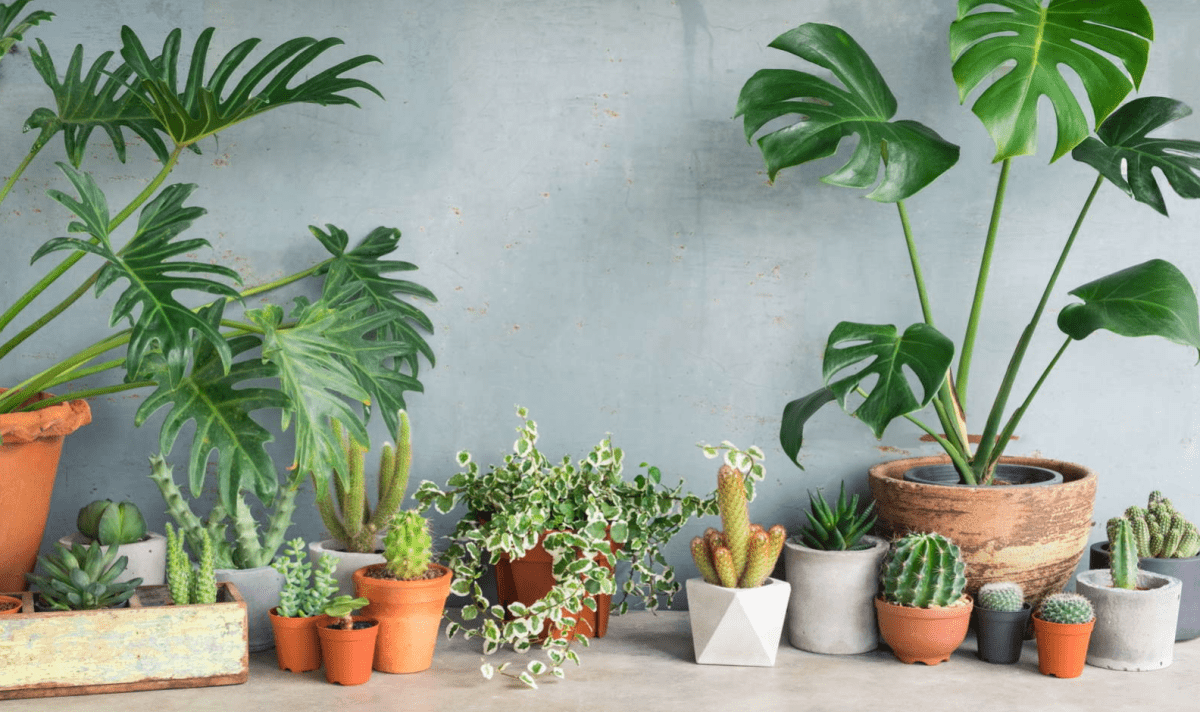
A few beautiful plants scattered around the home can create a much better atmosphere in almost no time – and in the truest sense of the word. Because green and flowering plants are not only pleasing to the eye. Houseplants have found their way into our lives since more and more people moved to cities, where immediate proximity to nature is not always guaranteed. While just a hundred years ago, even workers often owned a small vegetable garden or allotment, and for certain professions such as coal mining, a house with a garden was part of the job, the world of work and life has changed fundamentally. Growing cities are accommodating more people who don't get outside during the week, and often even longer. And those who can't get out into nature simply bring it home.

Why it's worth keeping houseplants
Plants have numerous benefits, aside from their sheer beauty. Even a few plants on a windowsill or balcony, or a large, beautiful plant, instantly make rooms feel much more homely. Green plants, in particular, do much more.
- They improve the indoor air and ensure sufficient humidity even when the air is heated.
- Even though houseplants improve indoor air quality, regular ventilation is the most effective way to keep the air fresh.
- Plants are natural sound insulators.
- Green plants and flowering plants are stress relievers – looking at them and caring for them grounds the owner just as much as gardening.
- A “green” environment promotes concentration.
Popular houseplants that do a lot of good
What decorates the rooms of your home naturally depends somewhat on your own preferences, but also on the amount of light and sun. Species that love full sun simply don't thrive in a north-facing window – and vice versa. And anyone with a good sense of plants can help even demanding species thrive. For plant lovers without the proverbial green thumb, however, we recommend species that are undemanding and will survive even if you forget to water them.
Many popular houseplants, such as aloe, spider plants, philodendrons, and smaller palm species, originate from tropical forests, where they thrive in shade or partial shade. This makes them ideal for indoor growth. Ferns and ivy also cope well with low light and even thrive in cool spaces such as hallways or stairwells. Green plants also find a place in the kitchen: Here, in the form of popular culinary herbs such as rosemary, thyme, or basil.

Houseplants in the bedroom: Are they really that bad?
Like all large and small plant species, green plants in your home convert carbon dioxide into oxygen via their chlorophyll. Many plants in your home therefore provide air you can breathe. Plants with large leaves are especially ideal for this. However, it's often said that plants, conversely, remove oxygen from the air overnight. Therefore, they should – supposedly – not be kept in the bedroom.
In fact, photosynthesis is reversed at night, meaning plants receive no sunlight for CO2 reduction and instead absorb oxygen. However, this only happens to a very small extent and certainly doesn't cause gradual suffocation during sleep! Houseplant experts, however, recommend hydroponics and undemanding, infrequently watered plants for bedrooms, such as aloe, the perennial snake plant, or orchids. These pose less of a risk of mold in the potting soil.

Grow your own houseplants?!
Anyone who takes a liking to houseplants will quickly notice that many species are easy to propagate. The undemanding spider plant constantly produces new offshoots, and some kitchen herbs, such as mint, can send new plants into neighboring pots by means of offshoots. But you can also grow plants yourself from seeds and kernels, either in pots or even in a practical raised bed on the balcony.
Whether you try growing green plants or cultivate fruits and vegetables instead is up to your own interests. The popular avocado, for example, is a fast-growing tree that can easily be grown from a seed: simply attach three "feet" made of matchsticks to the seed and place it in a glass of water about 1 cm deep. Roots and seedlings will soon form in a bright, but not sunny, location. When the first leaves appear, the seed can be planted halfway into the soil.

However, an avocado quickly exceeds the limits of what's possible; the tree quickly grows several meters tall and then needs to be "released into the wild." With a little patience, you can harvest your own avocados after a few years (but this requires proper pollination), thus avoiding environmentally harmful supermarket avocados in the future. If you prefer smaller plants, you can try growing tomatoes or peppers in pots, or settle for slow-growing varieties.


