


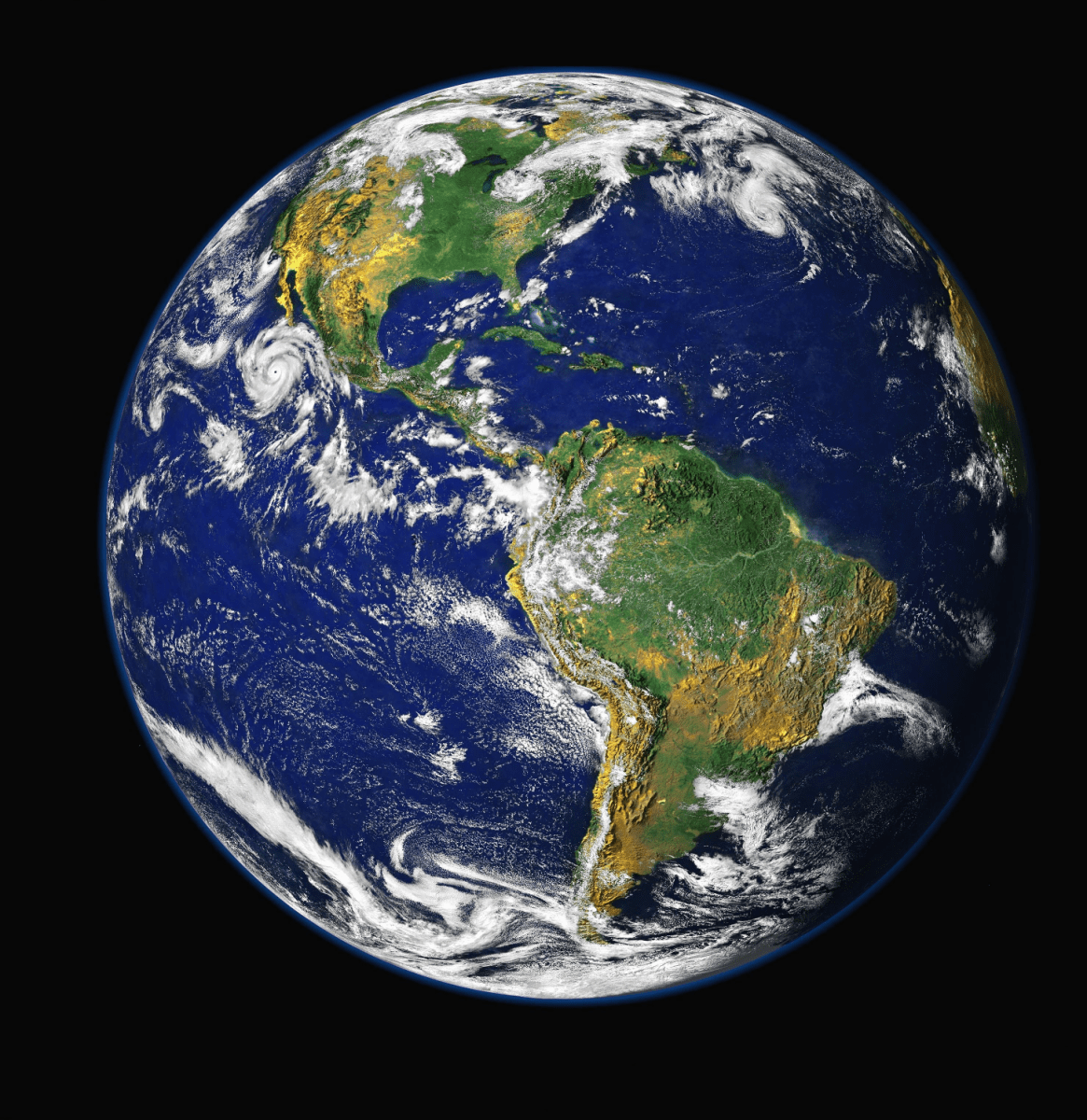
Western industrialized nations, as well as emerging economies like China and India, are among the biggest climate offenders. The unrestrained exploitation of the planet's natural resources ensures that climate change and its consequences will soon be irreversible – if they aren't already. And we don't have a planet B. That's why we at NIKIN want to contribute in every way possible to raising awareness about what we can do to protect our environment. Each and every one of us.
But how can you live in a way that protects the Earth's ecosystem? And can you measure whether you're truly living sustainably? Yes, you can. That's what the so-called "ecological footprint" is for!
What is the “ecological footprint”?
In English, it's called the Ecological Footprint – the biologically productive area required to maintain a person's standard of living. This includes not only the supply of food and water, but also the provision of energy, the carbon dioxide released directly or indirectly by that person, and waste disposal. This required area is compared to the globally or regionally available area measured by the number of inhabitants. The concept of the Ecological Footprint is not new – it was developed in 1994, and a veritable Global Footprint Network has existed since 2003. The protection of our planet is actively supported by renowned researchers and Nobel laureates.
How the “ecological footprint” is calculated
The ecological footprint can be calculated based on a person's lifestyle. It essentially measures how much usable land would be needed to continue maintaining the lifestyle to which the person is accustomed. This is compared to the actually available and biologically usable land area – that is, the Earth's surface, minus built-up areas, but also deserts, ice sheets, or mountains.
Anyone who wants to take the time to calculate their own ecological footprint can do so: there's a dedicated online footprint calculator for that. Simply answer the questions and be amazed. Because despite all our carefulness, even the most environmentally conscious among us still has plenty of room for improvement...
How big are our footprints?
Anyone who looks at the average ecological footprint on the world's continents quickly realizes that the real climate sinners are North Americans. Their footprint is greater than 8 – a truly drastic figure and still twice as large as in Europe, where people still live quite lavishly. At least ecologically.
In contrast, people in Africa live almost exemplary lives, with an ecological footprint of 1.4. This is no surprise, given that many Africans still live traditionally and sustainably. Unfortunately, this way of life is under severe threat. Many people in Africa can no longer live in the traditional way, nor do they want to. Drought, unrest, and new consumption patterns are changing behavior here and will ensure that Africans, too, will soon be "a size up."

How can you reduce your own ecological footprint?
Each of us can significantly reduce our ecological footprint in various ways. Many of them aren't difficult at all and will soon become routine.
- Use less energy! Turn off electrical appliances properly and don't leave them running unnecessarily.
- Always use energy-saving bulbs. This can save a huge amount of electricity.
- Separate waste carefully – and create less waste in the first place.
- Buying locally and freshly helps reduce long transport routes and thus energy consumption. It also helps local producers!
- Leave the car at home and walk more or get out your bike instead. And as for air travel... as painful as it is, it's a real pain!
- Consume less, recycle more – buy only sustainable and fair clothing and appliances or buy second-hand and use your own things for a really long time instead of replacing them with the latest model every year.
These are just a few examples that quickly demonstrate how many ways there are to live more modestly. Because we all still sin far too much.
Who are the biggest climate sinners?
What hardly anyone realizes in the midst of the debate about exhaust fumes and CO2 emissions from cars is that there are much bigger climate offenders (without wanting to take a stand for all the SUVs on European roads). Global meat production, in particular, is a crime against the global climate. Large herds of cattle require pasture and feed. To provide this, forests are being cleared and soy is being grown instead. Added to this are the digestive gases emitted by cattle, which significantly increase the world's CO2 emissions. Therefore, it's worth rethinking your own meat consumption, minimizing it, and consuming it consciously and, if possible, only locally.
But the production of biofuels, for example from rapeseed or soy, also falls under this category, and for similar reasons.
Things have to change. Now!
The truth is—and you have to make this clear to yourself—that there's no way around a little sacrifice. We've all lived very well for a very long time—and beyond our means. Now the bill is coming. If we fail to change our lifestyles, we won't be able to account for them to our children and grandchildren.
That's why we at NIKIN strive, not only privately but also with our project, to ensure that the earth remains as beautiful and livable as it always is. With every purchase from us, you donate to plant a tree through our partner OneTreePlanted. This won't change the world overnight—but it's a start. And you're part of it!


