


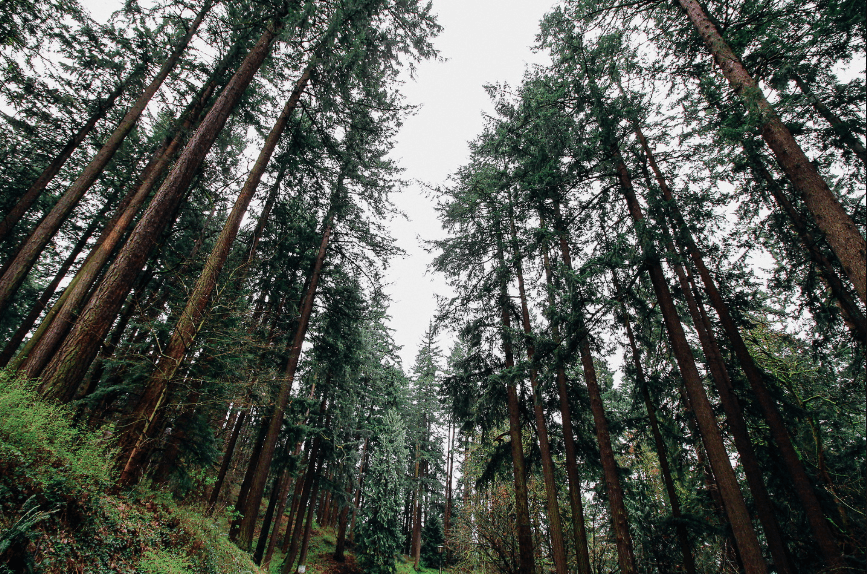
The great forests and why they are so worth protecting
There's hardly anyone who remains untouched by the magic of a forest. Especially if it's a largely natural forest and not a forestry or commercial forest. In urban areas, it's easy to lose touch with nature, and indeed, the world's great forests are constantly under siege – for timber extraction, to expand human settlements, and to exploit mineral resources. Yet, large parts of our green planet are still covered in forests, and we should ensure that it stays that way.
Forests do amazing things
Forests exist wherever there is sufficient light and warmth, favorable soil conditions, and water. Currently, less than a third of our planet's land mass is forested. Yet, trees are the second most important carbon sink after the oceans. Forests store approximately 2.6 billion tons of carbon annually and significantly influence the carbon dioxide balance in our atmosphere. When forests disappear, not only does the climate suffer. The soil and groundwater balance are also destabilized. The likelihood of landslides, floods, and droughts increases dramatically.
The great forests of the earth
Among the world's largest forests is the vast coniferous forest that stretches from northern Norway to Siberia and Alaska. The so-called Eurasian Boreal Forest stretches almost unbroken across three continents and invites you to take the longest forest walk in the world! Equally extensive, but highly endangered, is the South American Amazon rainforest. Huge areas are constantly being deforested, even though researchers admit that numerous animal and plant species there are either unknown or have not yet been sufficiently studied. The Amazon forests in particular may hold natural cures for numerous diseases that we don't yet even know about.
Another fascinating, expansive rainforest is located in Canada! British Columbia National Park on Canada's west coast protects the world's only subtropical rainforest, where it's quite wet but rarely hot. Those who want to see giant trees can do so in California's Sequoia National Park, where the giant sequoias, which are over 100 meters tall, are strictly protected. And even in the heart of Europe, there are large, untouched forests like the Bialowiecza Forest. On the border between Poland and Belarus lies one of Europe's largest forests, with an ancient oak population. Even today, the Bialowiecza Forest is home to the European bison and is well worth a visit.
The forest: use – protection – recreation
Forests are multifunctional treasures for humans, animals, and the environment. They fulfill essential functions in the three areas of utility, protection, and recreation. And by no means all of these relate to humans and their needs. The benefits of forests extend far beyond industrial timber harvesting or mushroom picking while strolling through the woods. In the broadest sense, they also include the use of forests, for example, for the production of seeds for tree propagation, as well as the use of game populations for high-quality meat, which can be obtained through hunting.
The protective function of forests is truly astonishing – forests filter and conserve water, thus contributing to the maintenance of clean groundwater. Trees also produce oxygen through the process of photosynthesis. Forests are therefore the "green lungs" of our planet. They also play an enormous role in species conservation, providing a habitat for 80% of our planet's flora and fauna.
And there’s no need to say much about the recreational function – who doesn’t feel refreshed and invigorated after a walk in the forest?
Interesting facts about the forest
In German forests alone, there are approximately 90 different species of trees and shrubs. However, half of the forest's appearance is dominated by conifers, particularly pines and spruces. Beech is also well represented at 16%, while the "German" oak accounts for only 9%. In addition to trees and shrubs, forests provide habitats for over a thousand other plants and are a home for thousands of animal species. The benefits of forests are now undisputed, and accordingly, almost half of Germany's forest areas are classified as landscape conservation areas, and over a third are even nature parks. Particularly strict protection requirements exist in dedicated nature reserves or biosphere reserves.
Forests are used for timber production, with more than 100 million m³ of wood growing annually in Germany alone. Not all of this is immediately used, i.e., felled, because increasingly sustainable forestry is subject to PEFC and FSC certifications and ensures the maintenance and preservation of forest stands.
At NIKIN, we want to preserve our forests. That's why we plant a tree for every product sold – at over 10 locations worldwide. Of course, we don't plant the same species everywhere, but rather locally suitable trees selected by experts.


