


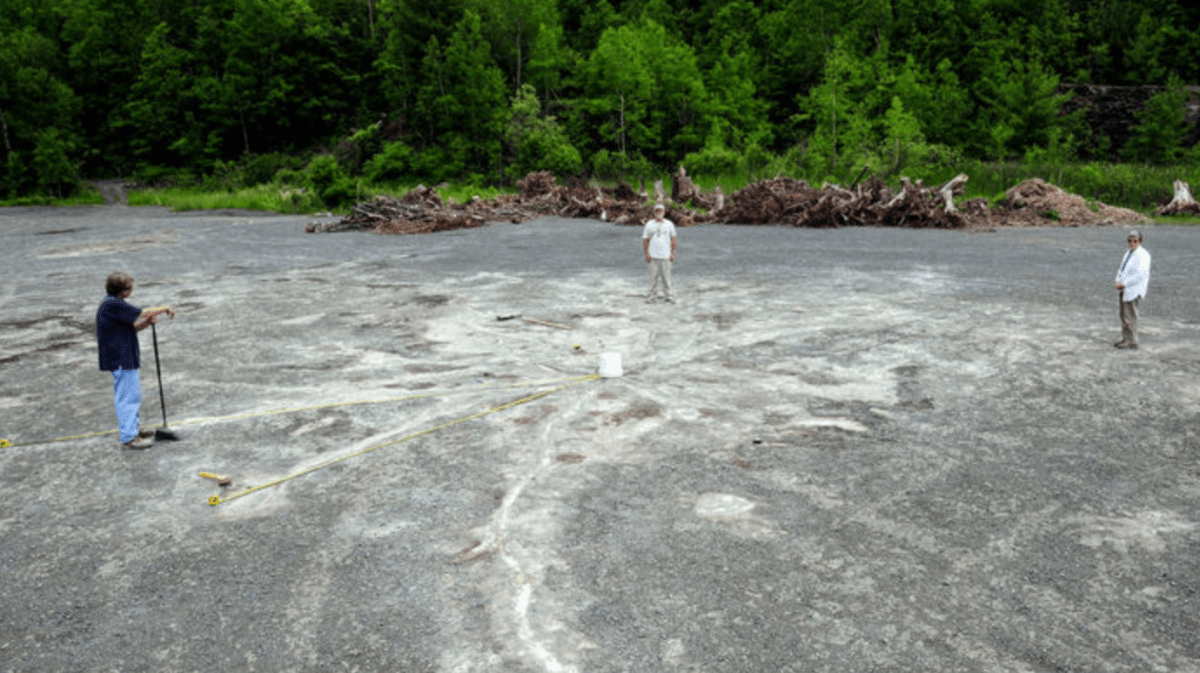
Is New York the first place you think of when you think of ancient forests? It is now, because a fossil of the oldest forest on Earth was recently discovered in an abandoned quarry in Cairo, New York.

Source: Charles ver Straeten
The forest is believed to be around 386 million years old, several million years older than the oldest known forest, which, interestingly, is also found in New York.
Why is this discovery important?
It suggests that modern plants evolved earlier than previously thought and therefore had a longer influence on Earth's climate and ecology. Scientists are incredibly meticulous when it comes to reconstructing history from Earth's fossil record, but this is only the third forest from the Middle Devonian period, and the new discovery means some Paleozoic timelines need to be updated.
A walk along the prehistoric memory trail
Finding well-preserved fossils from long-gone root systems is essentially the holy grail of paleobotanists, but the real appeal for the everyday nature lover is the opportunity to look back and marvel at how our terrestrial world came to be—and how important trees were in that creation story.
We all know that life on Earth began in the sea, and the same is true for plants. The first plants began colonizing the land around 430 million years ago, but it took some time for them to evolve and become complex. Things like the development of vascular tissue, roots, and the ability to reproduce by seed were crucial evolutionary steps, not only for the development of what we know today as trees, but also for the creation of soil and the concurrent evolution of insects, vertebrates, and other organisms that depended on these plants.
Biodiversity didn't just appear fully formed in some great gateway to creation, but happened very slowly over millions of years, literally starting from individual cells and learning to become something bigger in a tiny step (see also the bottom-up diagram below to trace the evolution of plants).

Source: OneTreePlanted
The evolutionary cradle of the Devonian and Carboniferous periods
The newly discovered fossil forest dates back to the Middle Devonian period, which lasted between 416 million and 358 million years ago, and is the fourth period of the Paleozoic Era. It preceded the better-known Carboniferous period, during which giant trees and forests dominated the landscape, increasing atmospheric oxygen from 21% to 35% (which also led to large insects and amphibians), while simultaneously reducing and sequestering large amounts of carbon to create the coal we have since used as fuel.
The lesser-known but essential precursor to all these climate-changing forests, the Devonian, is the period when plants truly began to form Earth's first forests, consisting of lycophytes, horsetails, and ferns. The Devonian is also where Archaeopteris, also known as the first successful trees—with a softwood trunk growing successive rings—finally evolved. The new fossils show that Archaeopteris evolved about 2-3 million years earlier than previously thought and therefore had a longer influence on Earth's ecology, geochemical cycles, and atmosphere.
Another specimen of the new discovery is still somewhat unclear, but scientists believe it may belong to the class of clubmosses—the direct ancestors of all those carbon-sucking trees of the Carboniferous period.
What we know about the jungle is that there were no birds or large animals, only primitive insects, and that the trees had fern-like fronds instead of leaves or needles, giving them a hair-like appearance.

Fossil roots from Cairo, New York. Source: William Stein & Christopher Berry
The value of today's 360° perspective
A few million years may not seem like much in the grand scheme of Earth's history, but it's very significant in how scientists explain the evolution of trees and their long-term impact on our world. It means that the environmental changes that occurred were the result of a longer, slower process.
There's always more to learn for anyone interested in trees, but we now have the privilege of millions of years of collective science and data that loudly and clearly demonstrate the most important point here: Our planet is extraordinary, and plants are the key to life! We also know that humans can and do impact the biosphere, and that an abundance of trees can cool the atmosphere.
Reforestation does not replace the need to reduce the burning of fossil fuels, but it can definitely have a positive and balancing effect on our climate, so plant a tree today to make a positive impact.
© This blog was researched, written, and published by our partner organization OneTreePlanted. The content was adapted and translated by NIKIN. This blog may contain some deviations from the original. You can find the original blog and further information at www.onetreeplanted.org . We have been working with this renowned non-profit organization since 2016 – to date, we have planted over 450,000 trees in various locations around the world.


