


Why circular economy is more important than ever
Recycling alone is no longer enough. If we truly want to reduce our impact on the environment, products must be designed from the outset to be recyclable or even biodegradable – without waste, without exploitation. This is precisely the principle of the circular economy: resources remain in circulation, products are recycled, and materials live on.
What NIKIN does: Cradle to Cradle Gold & Circular Cashback
NIKIN relies on products with Cradle to Cradle Gold certification, made from the innovative naNea material , which is the only one in the world to have achieved the highest rating in material health.

NIKIN was also the first fashion brand in Switzerland to introduce "Circular Cashback" : Customers receive money back when they return their product after use – so that it can be recycled or composted.
"Our grandparents showed us how it's done: A hoodie was patched, reused, and only thrown away at the very end. That's exactly where we want to go back – simply with modern means." – Nicholas Hänny, CEO of NIKIN
What Pandinavia does: Circular merch with LOOP®
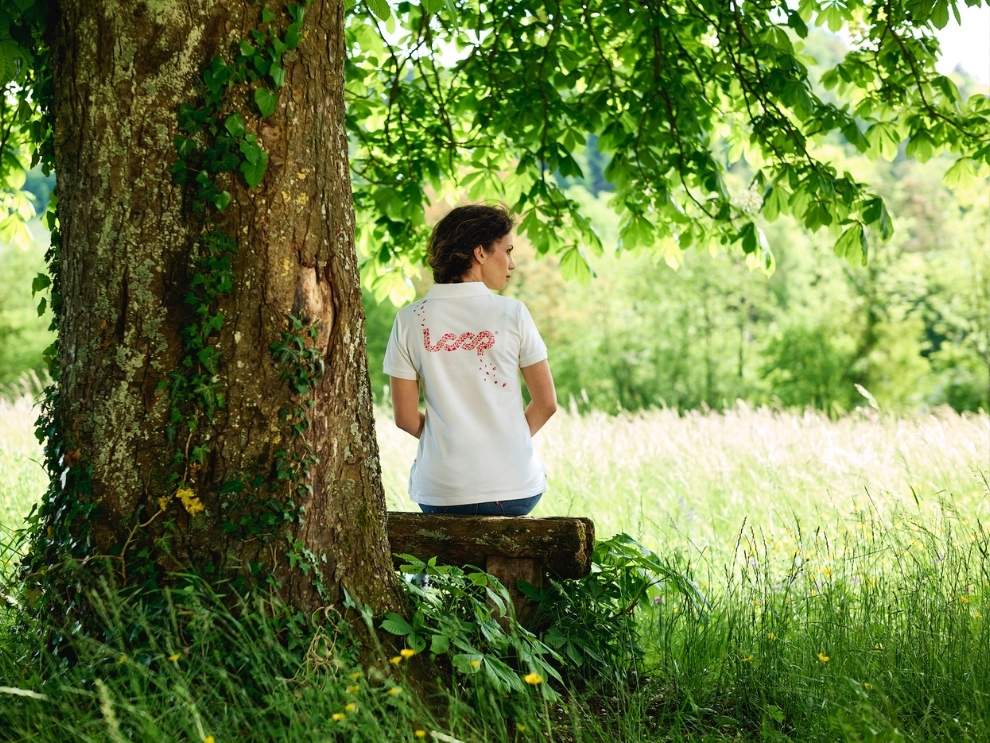
With LOOP®, Pandinavia offers the only circular corporate wear line on the Swiss market – consisting of Cradle to Cradle-certified T-shirts. As an expert in environmentally conscious corporate wear, Pandinavia enables companies to convey their brand messages in an environmentally friendly way – without compromising on quality or design.
“Sustainable merch means that a product not only looks good, but is also well thought out – from origin to finish.” – Pandinavia AG

Why the merchandising market needs to change
Too many promotional items are thrown away after events or trade fairs these days – because they are cheaply produced, poorly designed, or simply unnecessary. This not only harms the environment but also the image of companies that actually want to be sustainable.
The key lies in quality rather than quantity – and in products that create real added value through circular concepts.
Together for a circular future
NIKIN collaborates with OceanSafe to bring innovative materials like naNea to market. Pandinavia contributes its expertise in the merch sector, making circular products accessible to businesses.
Together we show that the circular economy works – when brands, manufacturers and distributors pull together.
"Circular products require strong partnerships. Only together can we bring real alternatives to the market – and thus change it." – Nicholas Hänny, NIKIN
Conclusion
Circular economy is no longer an option, but a necessity. Companies that rethink today not only secure their reputation—they assume responsibility for future generations. NIKIN and Pandinavia invite other companies to rethink merch: high-quality, sustainable, and circular.


