


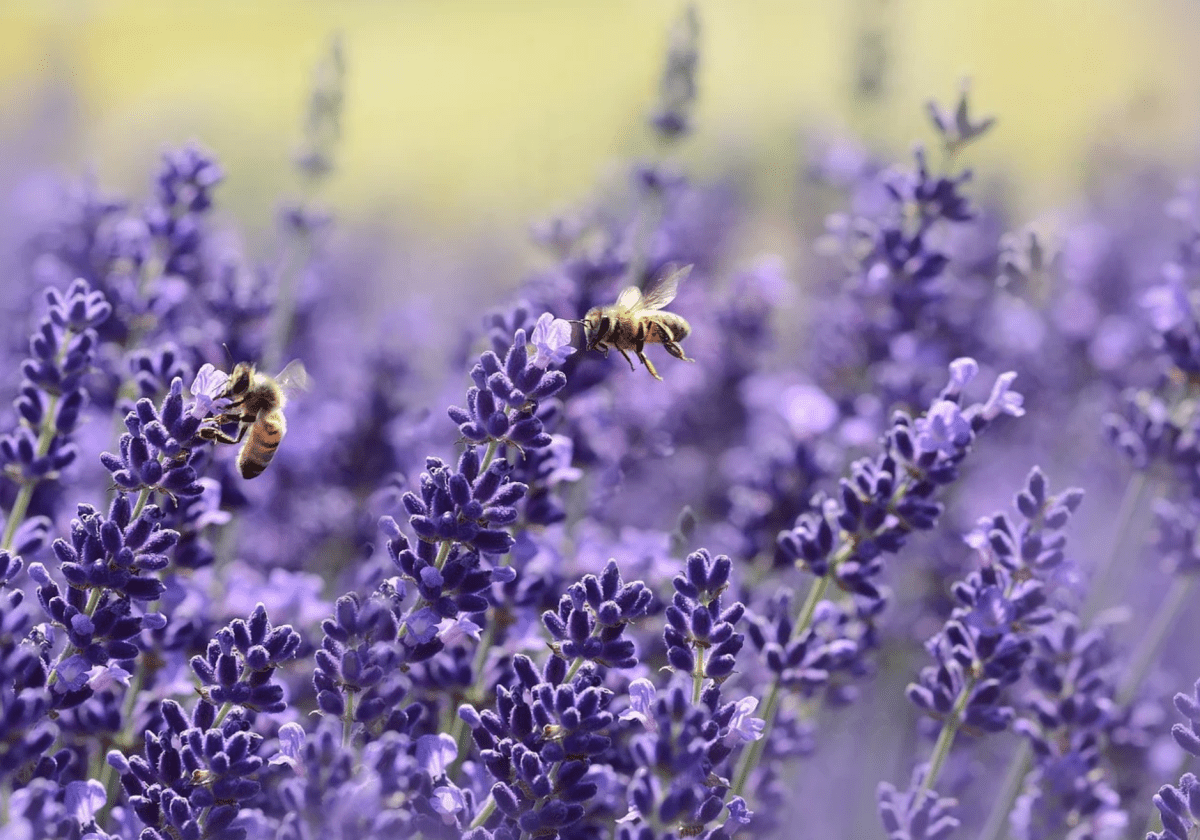

In one of our previous blogs, we reported on the decline of insects and highlighted its disastrous consequences for humans and nature. Bees are among the species most affected by human interference with the environment and climate change. Without bees, however, humans would be pretty lost. Therefore, this blog is dedicated to the peacefully buzzing bees, which we absolutely must protect.
Bees: wild, tamed and interesting
Bees are a genus of insects belonging to the Hymenoptera family. For us, bees primarily refer to honey bees. For thousands of years, humans have lived off the industriousness of bee colonies, which were kept as early as Pharaonic Egypt. But there is more to the honey bee, known as "Apis mellifera." Around 30,000 different bee species are known, and many of them do not collect honey and live solitary lives. Their performance as pollinators is nevertheless remarkable.
Honey bees are social insects – a "colony" of up to 70,000 bees gathers around the queen, who is also the "mother of the nation." Each queen bee establishes her own colony after the nuptial flight, during which she supplies herself with sufficient sperm from the male bees, the drones. The larvae that hatch from the eggs laid by the queen become workers, drones, or new queens, depending on their nutritional quality.
Small power planes
The tiny insects are only a few millimeters in size, but can carry their own weight in pollen and map their surroundings using excellent vision and the scent markings they leave behind. Once a flower has been harvested, there's no need to fly to it again. Bees are also incredibly efficient at communication. Through complex "dances," honeybees inform their fellow bees about the location of worthwhile hunting grounds.

The amazing performance of bees can be illustrated by a few facts:
- Global economic benefit of pollination: approximately $270 billion
- Kilometers traveled for 1 liter of nectar or 500 g of honey: 120,000 km, three times the circumference of the Earth
- “Task force” for 55 g of honey: around 20,000 bees
- Trips per bee per day: approximately 10x, with 0.05 g nectar harvest per flight
- Rest time: up to 8 hours daily
Why bees are not wasps
Among the thousands of bee species, relatively few live in colonies. The majority of wild bees live solitary lives; some only join together to raise their larvae, overwinter, or fend off enemies. There are also significant differences in their diet. Honey bees and some other social bees store food, while many wild bees live "hand to mouth."
The choice of food plants also varies – some species limit themselves to a single plant species. Honey bees, on the other hand, visit whatever is currently in bloom. While they are faithful to a particular plant, harvesting the flowers of one plant first before starting a new "project," they are not picky.
Bumblebees are among the socially "true" bees, while wasps and hornets represent a separate subfamily of Hymenoptera. They are also social insects that build complex nests. They prefer nectar for their food, but they also eat other insects or even meat.
Threat from parasites and habitat loss
Beekeepers refer to the loss of entire bee colonies when they talk about bee mortality—but conservationists are more concerned with the threat to numerous wild bee species. These industrious flyers are under threat in many ways.
They are at risk from infestation by the so-called Varroa mite. This mite can spread particularly in the hives of "industrial" beekeeping operations. The highly bred "farm bees" cannot offer much resistance. Older bee species are proving to be significantly more resistant to the mite and are therefore increasingly being rediscovered.
The loss of habitats is more difficult for the insects. They need flowering meadows and untouched natural landscapes where seasonal flowering plants thrive to survive, but nesting sites are also becoming scarce. Old walls or fallen tree trunks, and often even holes in the ground, are particularly popular with solitary wild bees. A diverse landscape with "refuges" is what bees need. Groomed lawns or gravel-covered front gardens deprive them of their habitat.
Added to this is the use of pesticides and herbicides, which kills entire bee colonies, unfortunately not only in large-scale agriculture but also in private gardens. Every summer, quite a few beekeepers notice when the hordes of holiday home owners in the surrounding countryside start gardening. This is when the bee colonies suffer.

Simple contributions to bee protection
Avoiding chemicals on your balcony and garden is already helping bees a lot. It's even better to give them a little corner of your garden—a wild patch where the grass isn't mown and where wildflowers can thrive. Woodpiles or even a "bee hotel" with drilled holes are also popular nesting sites.
Early-flowering plants are especially important for the nutrition of wild bees and bumblebees, as the insects fly out in the last days of winter and begin searching for food.
By protecting bees, we ensure our survival
Bee protection protects people. These tiny pollinators are 100 percent responsible for the growth of important crops. What not everyone knows is that pollination by bees also improves plant yield and fruit quality. Compared to mechanical pollination, significant differences have been observed. The close symbiosis between plants and bees therefore still holds many secrets.
At the same time, bees, with their biodiversity and diversity of life forms, are naturally a wonderful example of the fascinating world of insects. Despite their defensiveness, they are rarely truly aggressive and enrich one's own garden as well as large-scale biotopes.
At NIKIN, we focus primarily on sustainable materials in the fashion industry and want to combat global deforestation. But it's important to us to motivate people to rethink their lifestyles in other areas as well, and potentially make them more sustainable.

The impressive film “More Than Honey” shows how important bees are for biodiversity and our environment.


