You don't necessarily have to own a fashion brand to be aware of the lack of sustainability in this industry. There are now at least as many humanitarian disasters in textile factories every day as there are labels jumping on the "sustainable collections" bandwagon. Where is this leading? Anyone who asks these and all the subsequent questions will likely come to the uncomfortable truth that, in theory, we should all stop producing fashion until every last seam of all existing clothing has been reused, recycled, or worn to the point of being unusable. Would that really solve our global problem? Probably not.
 Image: Our clothing consumption must not harm the environment. ©HSLU
Textile cycle
We at NIKIN have already achieved a lot, but we still have at least as much to do. Therefore, we do our best every day to develop ourselves with an awareness of this fallibility. We are pursuing improvements on various levels, be it in distribution, design, collection, or the reuse of materials. For example, we have already launched a Reuse Collection, which was partially produced from recycled waste materials from older editions. For us, this collection was a symbol of circularity and the more conscious use of resources – but (unfortunately) not yet a reality in the fashion industry.
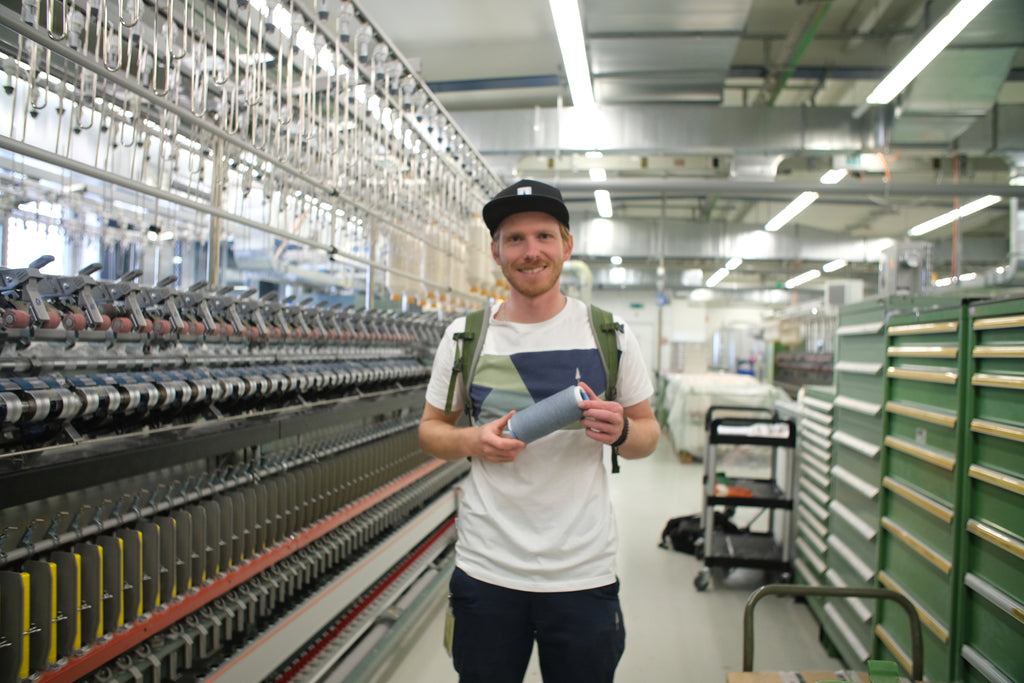
Image: Robin and the yarn. ©Ivan Schnoz
In search of pure substance
Researchers at the Lucerne University of Applied Sciences and Arts (HSLU) are also clear: we must find ways to recycle our old clothes much more effectively than before to close the textile cycle. Simply put, this means that old sweaters or T-shirts are not burned or turned into rags, but are instead turned into new clothing that ends up back in stores. Tina Tomovic and the team from the HSLU Product and Textile Research Group, together with industrial companies, investigated how this could work in the "Texcircle" project – which NIKIN supported as a network partner.

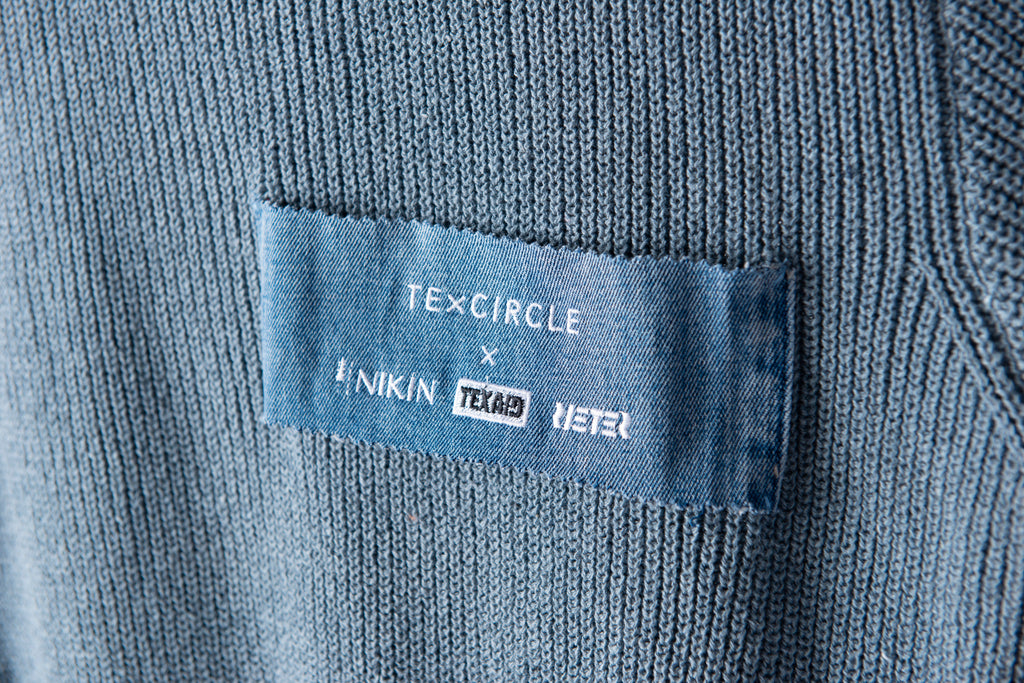
Image: A sweater prototype. ©HSLU
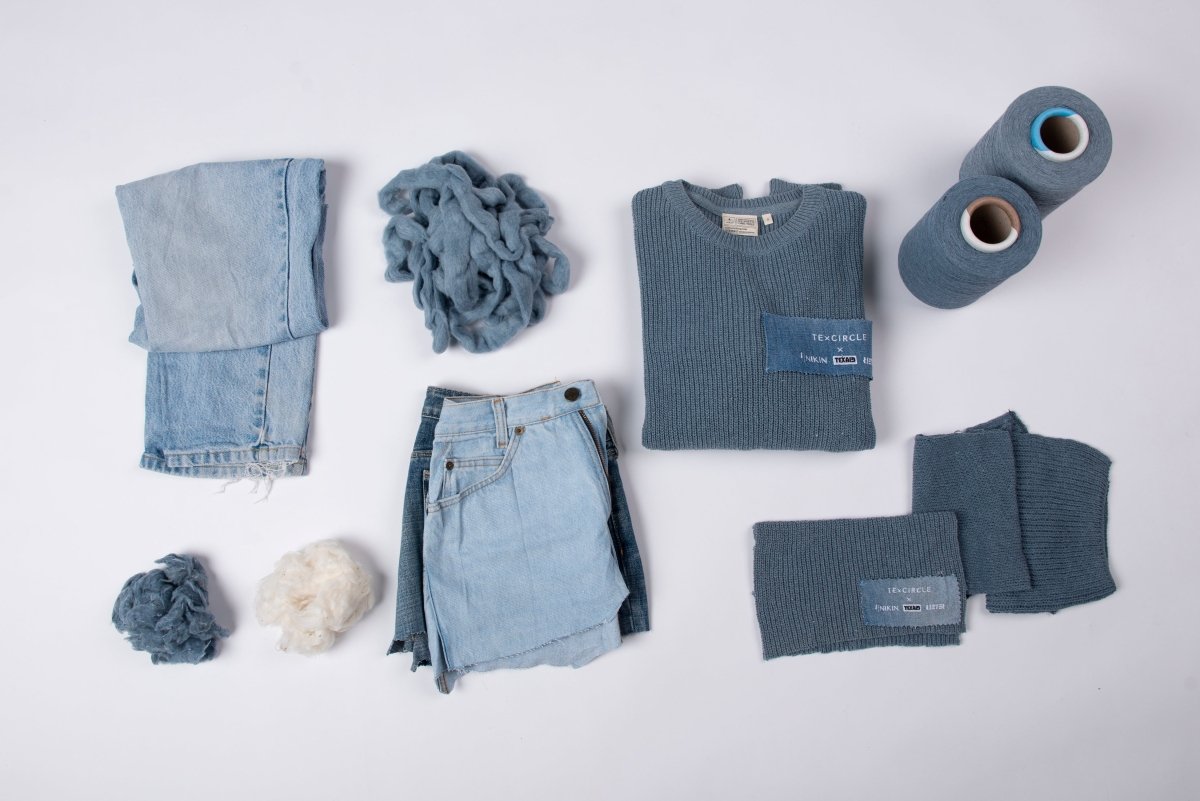
Old jeans become new sweaters
The entire recycling process chain was examined, from the collection of used clothing to its sorting and subsequent shredding, all the way to spinning the resulting raw material into new yarns and fleeces. Several prototypes based on the used textiles were created during the two-year project. For example, the Winterthur-based company Rieter produced a yarn for sweaters from old jeans. Samples are currently in our workshop in Lenzburg, on the workbench of NIKIN co-founder Robin Gnehm. Since there is still leftover yarn, we would like to give the "Texcircle" project a second life in the spirit of the circular economy. A limited collection is planned for 2023.
More information:
#staytuned