


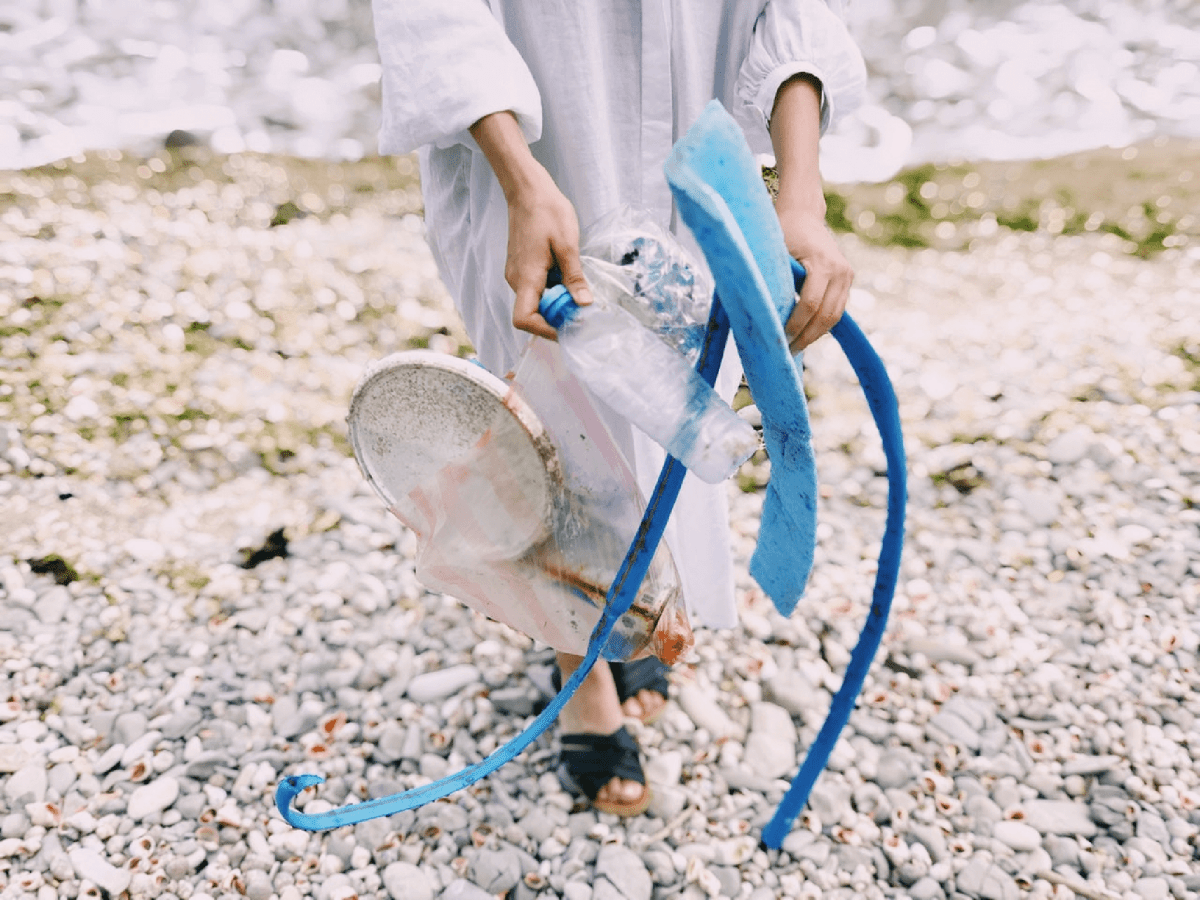
Our planet's oceans cover most of its surface – and are of great importance. They provide habitats for countless animals and plants and are also a source of food and recreation for us humans, who are essentially just "guests" on the seas. Not only that, but the world's oceans are an essential climate subsystem of the planet, constantly in balance with the atmosphere and playing a significant role in temperature regulation.
So many good reasons to value and protect the oceans. But instead, they are becoming polluted. Unfortunately, this isn't primarily due to sewage or toxic waste—although those are also serious factors—but rather due to plastic. Plastic, plastic, endless plastic, in the truest sense of the word. Because the material from which our everyday dreams are made is practically indestructible.

Every minute a garbage truck dumps plastic in the ocean!
It seems hard to imagine, but it's true – every minute the contents of a garbage truck end up somewhere at sea. There are now 86 million tons of plastic floating in the oceans. This has already created "plastic islands" in the Pacific, the largest of which exceeds Europe in area! These include larger pieces that sink to the seabed, but also floating pieces of plastic that entangle marine life and cause them to die a painful death, or they may eat them and also die. Microplastics are no less dangerous. Tiny particles that result from the decomposition of plastic waste, but are also deliberately added to other substances – we find microplastics in detergents, skin creams, scrubs, shower gels, and shampoos, so that they first end up in wastewater and eventually in groundwater, rivers, and oceans. And from there they enter the food chain – in other words, onto our plates.
[ product-handles list="treebottle-barrel, treebottle-glass-nikin-swim, treebottle-customized-small, treebottle-glass-allover-pines"]
Where does the garbage come from?
The majority of waste in the world's oceans isn't dumped overboard. It's not that simple. Instead, even plastic products that are carted to a landfill eventually end up in the ocean. Blown away by the wind... because while plastic can break down into small pieces, it's virtually indestructible. Other plastic particles are created by our consumer habits. Our beloved cozy fleece clothing, for example, releases hundreds of plastic fibers every time we wash them, which end up in wastewater and then eventually in rivers and oceans. The bottom line is that everyone who uses plastic contributes to ocean pollution.
The consequences of pollution
Microplastic particles in the oceans have long been ingested by all living creatures through their food. And so, at some point, they end up on our plates. Microplastics have been detected not only in numerous marine organisms, but recently also in human stool samples. The problem that began in our homes is thus returning to us.
Although the plasticizers considered toxic and once so widely used in plastics production are now banned within the EU, they continue to enter circulation through imports from third countries, remain in use—and end up in the ocean. The long-term consequences are not yet foreseeable.

What can be done – what is being done?
Unfortunately, the plastic waste already floating in the oceans is in international waters. Therefore, no country feels called upon to take action, even though there are global strategies to at least monitor coastal waters and their use.
Projects like the technology of Dutch inventor Boyan Slat, who is dedicated to cleaning the oceans, offer hope. "The Ocean Cleanup Project" aims to collect plastic waste and recycle it. Integration into ship filtration systems is also being considered.
The main source of plastic waste, however, is every single consumer. And there's a lot we can do here. Most of the plastic products we use every day are neither essential nor attractive and can be replaced with sensible alternatives.
Tips for everyday life without plastic
- Shopping with a net or a cloth bag
- Use tin, glass and ceramic containers instead of plastic wrap
- Buy fresh products at the market instead of packaged industrial food
- Do not use disposable products such as plastic plates or spoons
- Avoid plastic toys for children
- Drinks best from glass bottles
- Drink tap water instead of water from plastic bottles – it is often of better quality anyway

Support meaningful initiatives!
Those who live near a coast can donate time to help with a beach cleanup. Since we don't all live within sight of the ocean, there's also the option to support projects like "Oceans Without Plastic" through donations. The Take3 initiative is equally effective – it's about picking up three pieces of trash every time you visit the beach. If everyone does it, it will have an enormous impact!
The best thing is and remains – avoiding plastic. If you think about your everyday consumption, you're not only contributing to keeping our blue planet clean, but you're also giving yourself a better quality of life!


