


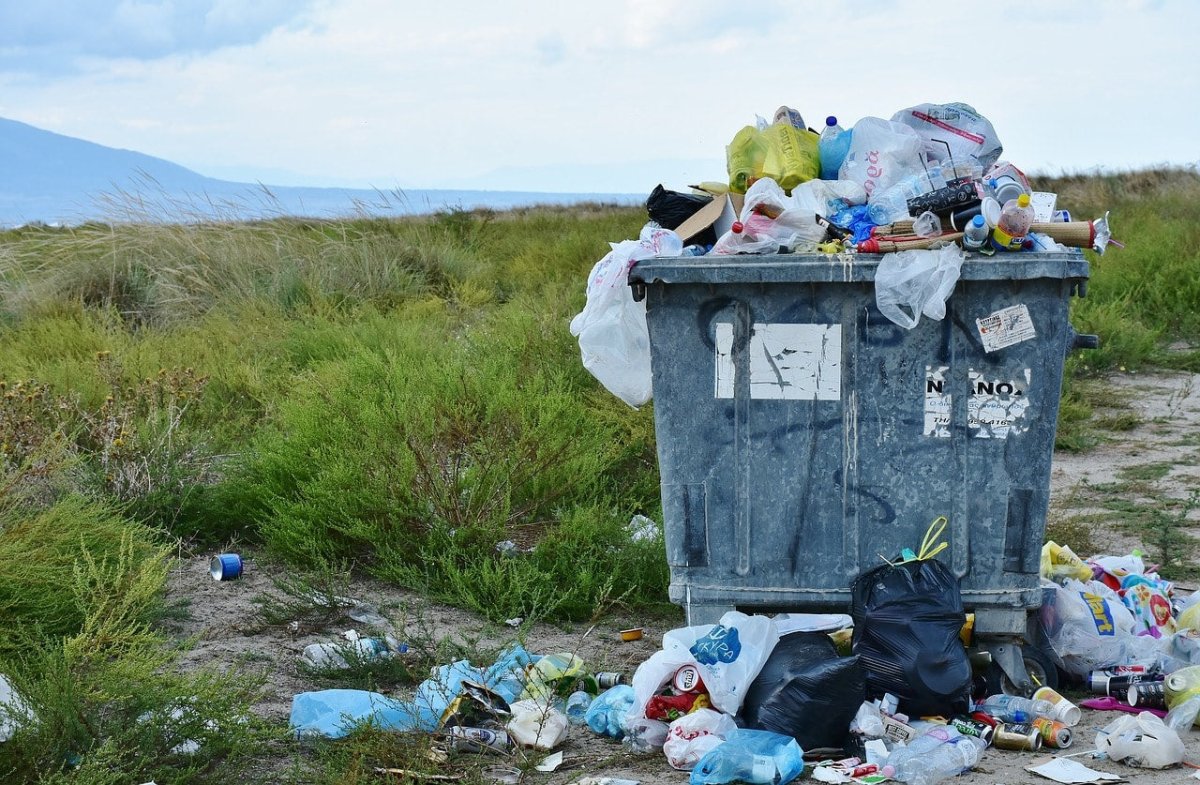
Recycling, or the reuse of used and discarded materials, has become so familiar to us that "waste separation" has become second nature to many. But why is recycling so important? And: Is it enough to simply recycle waste? Which materials can be effectively processed and which can't?
Almost equally important is the question of how recycling is handled on a larger scale. Can we trust the claims made by companies and their alleged recycling of materials? And what can and should we do ourselves?
Recycling is essential. But recycling alone isn't enough!
First of all: given a growing and ever-increasing global population, recycling definitely makes sense. We've written about the value of forests and the importance of preserving the world's forests more than once in our blog, and NIKIN also plants a tree for every order. It's obvious that we should recycle waste paper, cardboard, and cartons to protect forest habitats from deforestation.
The good news: paper consumption is declining in Europe. But it's still not nearly enough. We still use far too many single-use paper products, not all of which are recycled.
Should be recycled:
- Paper and cardboard
- Glass and tinplate
- Plastic and packaging
Recycling is good, doing without is better
The situation is similar with plastic. Plastic waste is a serious problem because it doesn't decompose. Instead, it is ground into ever finer particles. At some point, it ends up in the food chain as microplastics – and on our plates. Given the flood of plastic waste, recycling plastic is of course a must. But it would be even more important to avoid plastic as much as possible. There are always alternatives. It's quite simple: replace plastic bags with cloth bags – always and fundamentally. And stop using plastic products at home and in the office. Disposable dishes and plastic forks aren't necessary; there are inexpensive equivalents made of glass or porcelain – of course, they have to be washed and can't simply be collected or thrown away after a child's birthday party or other event. But let's be honest, isn't the environment we're leaving behind for our children worth a little effort?
[ product-handles list="treebottle-barrel, treebottle-glass-nikin-swim, treebottle-customized-small, treebottle-glass-allover-pines"]
Admittedly, it's sometimes a bit more tedious to search for drinks in reusable glass bottles than simply buying a PET bottle of Fanta or Coke. Nevertheless, they're available – and the taste is better. Better than tin cans, too, which are also recycled but aren't really necessary.
Our suggestion: one week of reduced waste
We recommend simply trying an experiment for a week: producing as little waste as possible, and then recycling it whenever possible. Glass and scrap metal are allowed, as are recycled paper, at least for the toilet. Plastic is a no-go! Where would that leave us?
If you're looking for a lot of fresh food—and avoid elaborate packaging, especially plastic—the best place to find it is at the market, not just for fruit and vegetables, but also for meat and fish. You may even be allowed to bring your own packaging materials, thus avoiding packaging waste.
Throw away less, live better
The great and valuable thing about such an experiment is that it opens our eyes to how much waste we accept every day. And of course, you experience shopping, cooking, and eating much more consciously when you avoid pre-packaged foods. That alone is enough to justify giving it a try. The biggest advantage, however, is that you enjoy more – and with a clear conscience. And the little waste that still accumulates? Can it go in the compost!


