


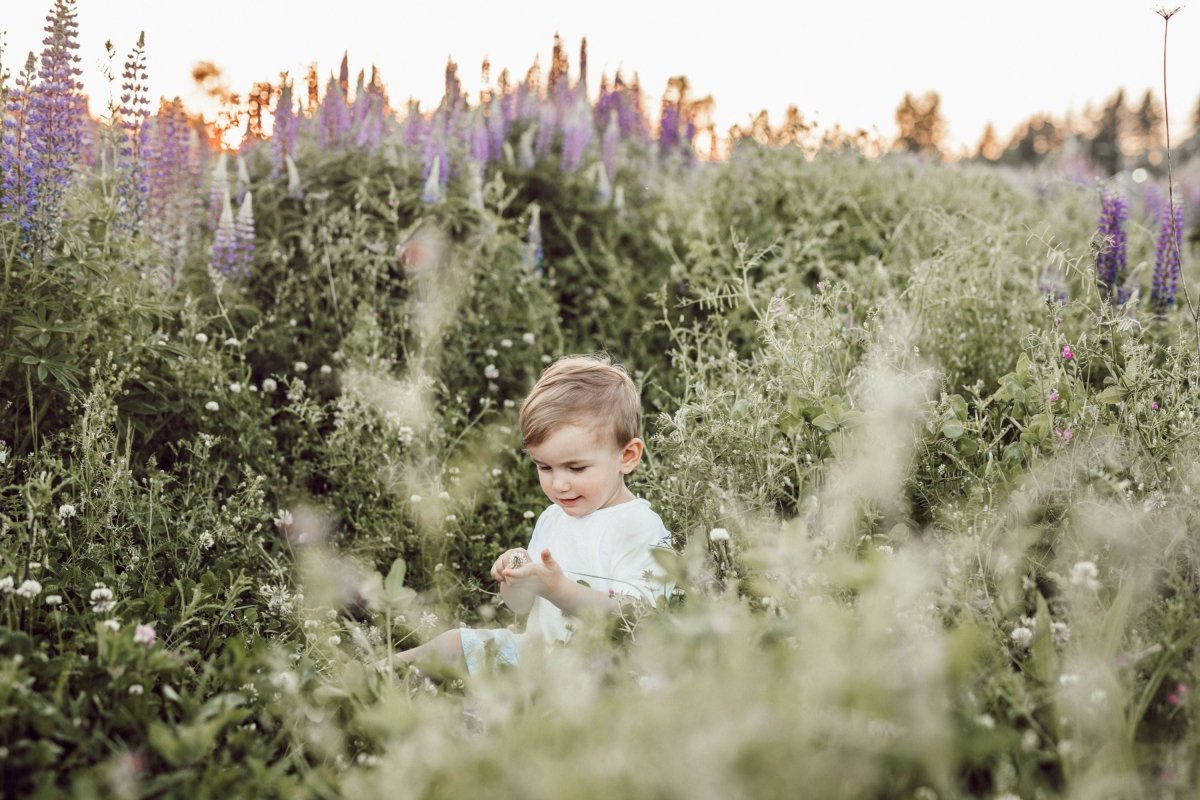
Anyone who remembers their own childhood and school days usually knows that they absorbed content that was inspiring. Educators, teachers, and consequently parents or other caregivers can rest assured that once their interest has been piqued, there's no need to push children and young people. And there are so many opportunities for this in the field of nature education:
- Hikes
- Visits or holidays on organic farms
- Workshops
- Excellent documentation in terms of content and form and child-friendly presentation of the topic in books or games
Joint activities centered around nature, wildlife, and plants are fun and provide real experiences (no, an app isn't the same...). It's crucial that parents themselves are passionate about the cause and model their own joy in nature and sustainable living.
 Image: There are many ways to help children connect with nature.
Your own behavior in everyday life: the best guide for children
Ultimately, it's the little things that make for successful environmental education: the everyday habits that children adopt and continue to practice. Conscious handling of food, responsible consumption, and living values such as modesty and consideration in moderation are a foundation that provides your offspring with a solid foundation for the rest of their lives.
Such behavior also corresponds to what children already enjoy and strengthens family bonds. Even the youngest children, for example, find cooking together and eating with family, with established but not overly rigid table rules and lively conversation, enriching. Walks or bike rides not only develop awareness of the environment but also develop motor skills.
Parents can even approach stressful aspects of parenting, such as the topic “Why we aren’t buying that now,” in a more relaxed manner if they focus on explaining rather than forbidding – and offer alternatives.
 Image: Leading by example – together.
Education as an introduction: use child-friendly offers
Easily accessible information is presented in a variety of ways, appealing to children and young people. Classics that also address important issues surrounding sustainability are plentiful – such as the cross-generational hit "Die Sendung mit der Maus" (The Mouse Show) or valuable children's books that some parents may still have in their cupboards.
While for the youngest children, a child-friendly approach, with fun elements and cuddly characters, ensures success, older children can already enjoy highly informative books or documentaries. Those who don't want to purchase the reading material themselves can often find extremely attractive offers for children at the local library, sometimes with accompanying events.
 Image: Information should be made easily accessible for the youngest children.
Living sustainability together
Those who go beyond the options mentioned above can set additional goals within the family to strive for together – for example, eliminating plastic or limiting driving. Supporting or participating in projects with a sustainability focus is also possible. Since the range of projects is now wide, the selection can be based on one's own interests.
Children are usually very comfortable with the idea of sustainability in the family—especially when the "grown-ups" demonstrate how it's done and when a responsible lifestyle is enjoyable. Coercion proves counterproductive here, especially since children, during repeated defiant phases, sometimes do the exact opposite of what their parents want. With calmness and good communication within the family, parents can be confident that the foundations laid early on will endure and shape their children's behavior in the long term.
Do you also have children you'd like to raise close to nature? How do you approach this topic? Write to us and share your experiences.
 Image: Into the wild.


