


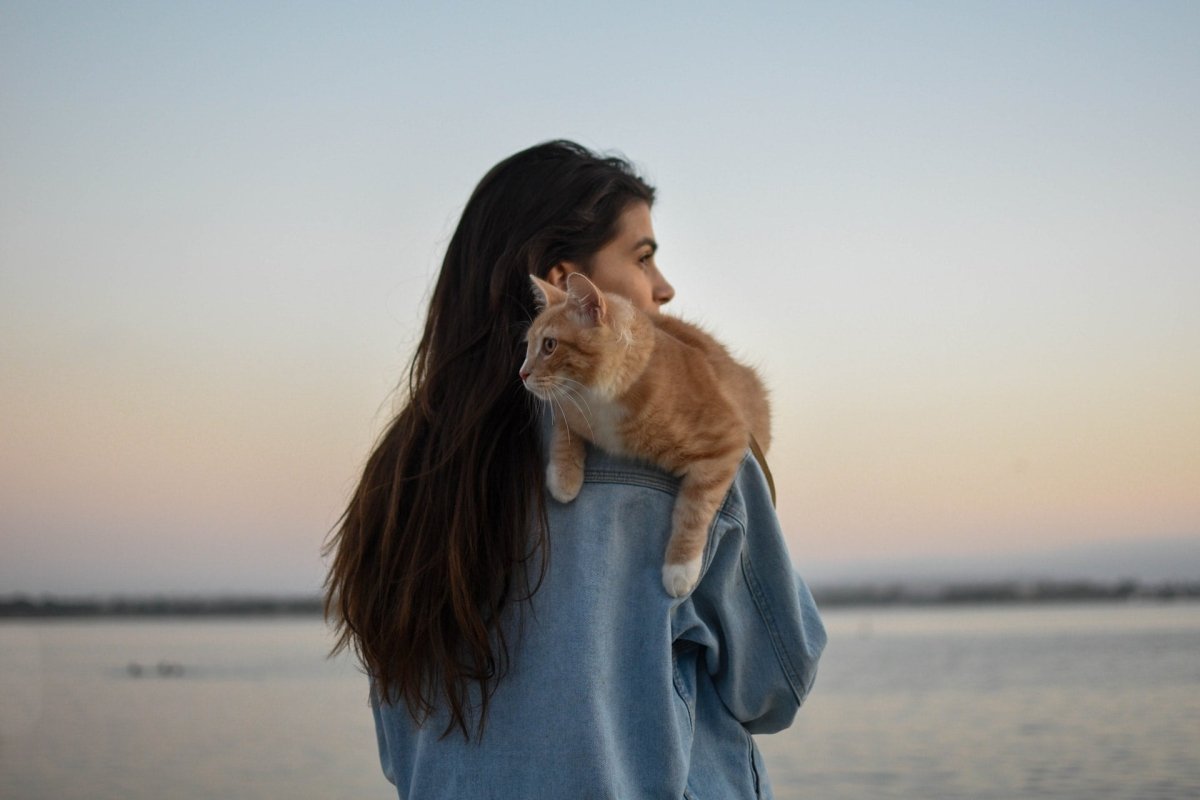
What few owners realize is that one cat produces 0.39 tons of CO2 annually! That's more than a third of what experts would like every person on Earth to emit per capita: namely, 1 ton of CO2. Given the growing number of domestic cats, this figure adds up to a considerable amount. But don't worry, you can help keep your cat's ecological footprint as small as possible by adopting environmentally friendly cat ownership.

Environmentally friendly cat keeping: Meat food as one of the main sinners
As with other pets, such as dogs , two factors in particular contribute to the lack of sustainability: cat food and the litter box. Since cats, unlike dogs, are truly carnivores, they cannot be converted to a vegetarian diet. Dogs can also meet their needs from plant-based protein, but a cat would become ill on such a diet because it would lack important trace elements such as taurine and the essential vitamin A. A vegan cat diet would therefore be animal cruelty.

Environmentally friendly cat care: the packaging makes the difference
So, you can't skimp on meat for your cat – but you can certainly skimp on its packaging. Dry food in paper or cardboard containers and wet food in the largest possible cans will reduce your carbon footprint. Even better is to make your own wet food, freeze it, and feed it (appropriately thawed and slightly warmed): for example, you can take not-too-fatty meat without any seasoning and a few aromatic vegetables like carrots or zucchini, cook it, and then puree it. Voilà, you have homemade cat food! Cats appreciate the flavor and variety that vegetables add, even if they provide little nutritional value. By cooking your own food, you can reduce packaging waste and also adapt to your cat's preferences.

The right cat litter for environmentally friendly cat ownership
Along with food, cat litter is a significant source of waste. While pet owners appreciate that even very young cats quickly take care of their own needs, a litter box also generates discarded litter. This can already accumulate quite a bit, and if a cat develops kidney disease in old age, the problem can become even greater. Of course, the simplest conceivable solution is to let the cat outside—unfortunately, this isn't always possible.
You should only skimp on the litter box if there are truly suitable outdoor areas for your cat to explore and roam. However, there are also ways to be more environmentally friendly with the litter box. To ensure it's best for both your cat and the environment, you should avoid chemical-laden products like scented litter crystals. Cat litter made from renewable materials is more environmentally friendly; it's also available without fragrance, is often compostable, and also contributes to reducing your cat's CO2 emissions. Wood pellets or sawdust are particularly suitable; they can be added to the litter box in coarse or fine form, depending on your cat's preferences.

Cats need only a few accessories – and none made of plastic
The accessories that cats really need are manageable and also enable environmentally friendly cat ownership by avoiding the use of plastic . A cat only needs a transport basket for occasional visits to the vet or for travel. Such baskets are also available woven from willow branches and can be closed with a mesh. Animals also appreciate having an opportunity to scratch. Instead of industrially manufactured scratching posts or scratching areas, you can use boards or pallets and wrap them in jute or sisal. Homemade scratching posts have the advantage that you can replace tattered parts, thus extending the lifespan of the item considerably. You can also make toys “for the cat” yourself – with crocheted mice made from sturdy yarn or simply with balls of paper held together with string. Cats discover the play potential of objects on their own and let us know what they like. If you would like to buy special toys for your kitties, you can also find them secondhand.

Keeping cats environmentally friendly is less difficult than expected
Cats in particular are curious and inventive – while playing, they demonstrate how sustainable pet ownership can be by helping themselves to paper bags and cardboard boxes. As a cat owner, you can join in, for example by using litter made from renewable resources and sometimes home-cooked wet food. If you can then let your cat outside occasionally, you've already taken a big step towards environmentally friendly cat ownership. We at NIKIN are also trying to make a difference with many small things. For example, we use little paper and, when we do, only tree-free paper. Our shipping from us to you is carbon-compensated, and we have an electric company car. You can find out where else we save resources and how we live sustainability here .


