


Sustainable Agriculture for People and Nature
In the region surrounding the Senegalese community of Nganda, previous agricultural practices – particularly the monoculture cultivation of peanuts – have depleted soils and destroyed important habitats. But this is precisely where we come in: an agroforestry project covering an area of up to 30,000 hectares is creating a system that combines forest, agriculture, and sustainable use.
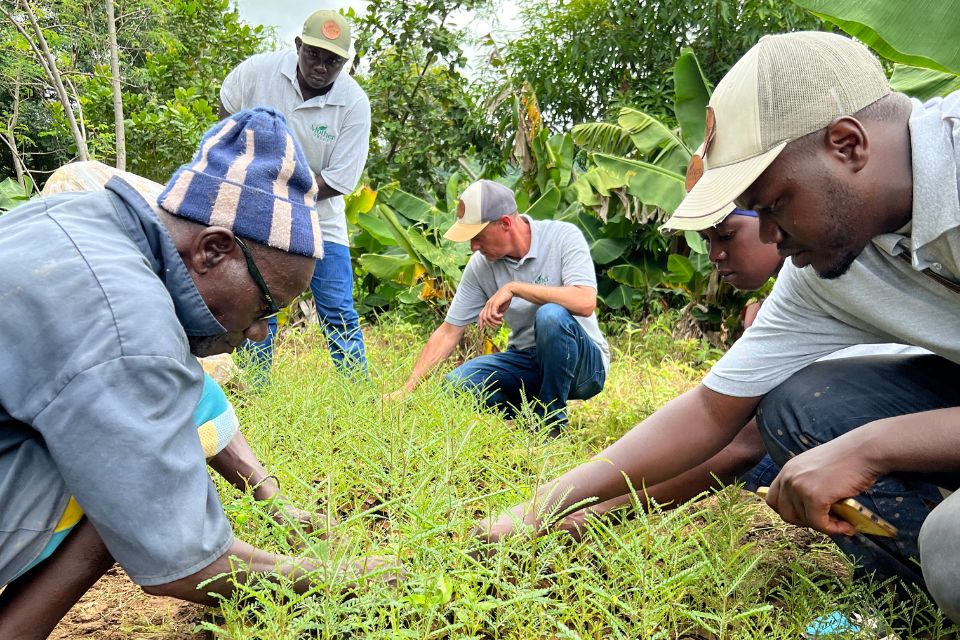
Instead of reforesting with single tree species, 6,000 local families actively participate, cultivating one hectare of land each – using a mix of native tree species and food crops. This not only improves soil quality but also enhances food and income security in the region.
The Power of Trees – and Community
Agroforestry is more than just reforestation. It promotes:
- healthy soils
- biodiversity
- higher agricultural yields
- and greater resilience to climate change
The geospatial technologies used help to precisely monitor development and secure plantings in the long term. The selection of tree species is also deliberate: among others, baobab, mahogany, tamarind, honey tree, and kapok tree are planted – all valuable for nature and people.

A Project with Long-term Impact
The project aims to stabilize the Gambia River basin in the long term – an ecologically important area in West Africa. In addition to the environment, the population also benefits: despite economic growth, over a third of people in Senegal live in poverty. This project addresses precisely this issue and creates prospects – with fairly paid work and sustainable development.
Impressive Facts and Figures
- Project Location: Nganda Region, Senegal
- Area per 10,000 trees: approx. 4.44 hectares
- Tree survival rate: approx. 75 %
- CO₂ sequestration per tree: approx. 0.027 tons
- Workload: approx. 20 working days per 10,000 trees
And which animals benefit?
With the new habitat, endangered and rare species are also returning:
- White-headed Vulture: A critically endangered bird of prey that lives in open savannas and plays an important role in the ecosystem as a scavenger.
- African Slender-snouted Crocodile: A rather shy and rare crocodile species found in slow-flowing waters – severely endangered due to habitat loss.
- African Threadtails: These delicate insects are not only fascinatingly beautiful but also an indicator of intact waters and high ecological quality.

Together for a Greener World
Thanks to your support, we are planting 109,319 trees for this project in Senegal from May to mid-October. Every single tree helps to regenerate the region in the long term – ecologically, socially, and economically. And the best part: you are a part of it.
Because our commitment to the environment goes beyond planting trees. We believe in the power of community and that together we can make the world a better place. With every NIKIN product you buy, we plant another tree. This turns your contribution into real impact – #treebytree.
You can find more about all our tree planting projects and the impact of your support on our TreeTracker page.


