


Having your own garden with large trees, colorful flowers, and fresh vegetables is a dream for many. Unfortunately, for people who live in cities, this often remains a dream. But with the principle of "urban farming," you can make this dream a reality on your own patio.

Urban agriculture, or precisely what is meant by "urban farming," is on the rise. More and more city dwellers are using every available space to grow food in densely populated areas. It's not uncommon to find several urban farming projects in large cities, all working together.
What is behind the term urban farming?
What makes urban farming so special? How does urban farming differ from, for example, allotment gardens? Well, for one thing, it's not (just) about self-sufficiency. Many urban farming projects sell their produce, whether at local markets, local restaurants, or nearby organic stores. Donating produce to food banks and soup kitchens is also conceivable. Allotment gardens or backyard gardens, on the other hand, serve the owners' own needs.
And while allotment gardens and home vegetable gardens are part of the planned inventory of a community, urban farming projects are created wherever there is space – on vacant land, on roofs and terraces, sometimes in schools or public parks.
Where does the idea actually come from?
The roots of urban farming can possibly be traced back to World War I. As the war devastated arable land across Europe, citizens were explicitly encouraged to use vacant plots within urban boundaries for vegetable gardening. The idea gained momentum during the Great Depression and, in many cases, contributed to survival.
And during the duration of World War II, cities and towns released even more land—with good reason, as the so-called "victory gardens" produced food worth approximately $3 million (at the time). A remarkable achievement, and a significant portion of the US urban farming output was even shipped to soldiers overseas.

What can be grown in urban farming?
Anything that grows in a normal field will also grow in an urban context. This includes all kinds of vegetables, lettuces, root vegetables, and even perennials like corn. Fruit, especially berries, can also be easily cultivated, and even fruits like apples, pears, peaches, and many more can be planted—although the latter are usually grown in specially designed espalier varieties. An urban farming project can be complemented by keeping bees, which not only produce honey but also pollinate the plants. Small animals such as rabbits or guinea pigs, even poultry, can also be part of such projects.
How do urban farmers proceed?
There are, of course, limitations to this type of cultivation. The most important of these is the very small size of the plots. Therefore, the use of large machinery is not possible; work is largely done manually. Furthermore, many urban farming projects are exploring ways to grow more crops in a smaller space, more effectively, and at the same time sustainably. The methods are usually derived from organic farming – this applies to plant protection as well as pest control. Even water consumption is covered by sophisticated systems, often using greywater or similar wastewater, which are compatible with food production. Where sunlight is lacking, urban farming also uses special lighting if the land allows it. Truly, every possible approach is taken to optimize yield in a reasonable way.

The many advantages of urban farming
Urban farming has many advantages. The most important of these is, of course, the availability of fresh produce that doesn't require long transport and environmentally harmful packaging. In addition, the produce is often organic.
In addition, green spaces and cultivated areas in the city help clean the air and allow people to have close contact with nature. Children and young people, in particular, have the opportunity to learn gardening—often laying the foundation for a lifelong fascination.
Quite a few municipalities are dedicating land to urban farming. Anyone interested in this type of sustainable agriculture on a small scale but lacking space can inquire with their city or municipality. Seeing something grow is a joy, improves the quality of life, and enhances the entire environment. Urban farming definitely has a future!
Urban farming – on your own balcony
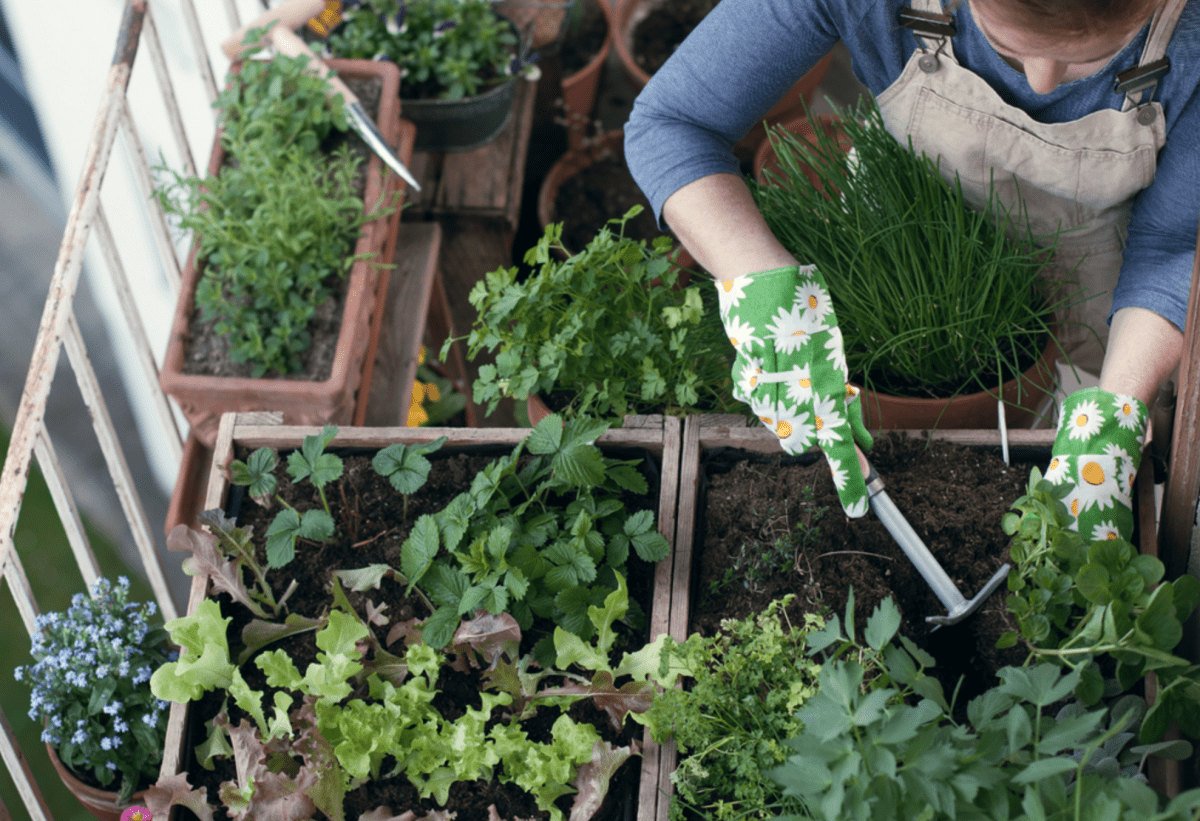
Of course, urban farming can also be done on a smaller scale, such as at home. Herbs and vegetables, in particular, are ideal for your own patio. Having fresh lettuce, basil, and tomatoes on your plate every day is not only delicious and healthy, but also inexpensive. Furthermore, tending your own garden is not only sustainable, but also a pleasant and varied activity that allows you to simply unwind for a while.
At NIKIN, we are primarily committed to sustainability in fashion and are committed to preserving forests – but we hope that our blog has sparked your interest in urban farming and motivated you to rethink your own lifestyle and perhaps make it more sustainable.


