


Fangorn: When the Forest Rises
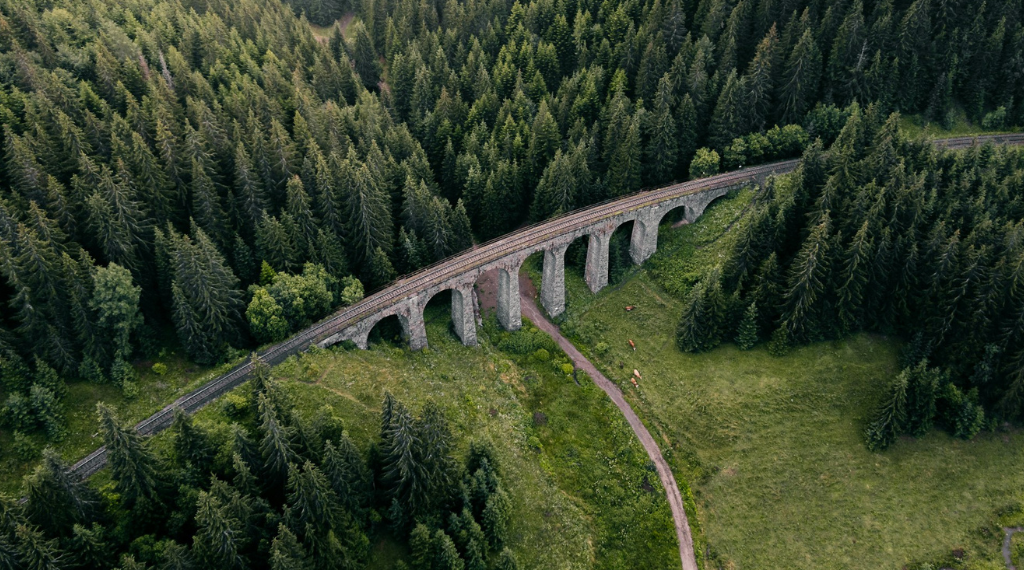
In J.R.R. Tolkien’s “The Lord of the Rings,” the Fangorn Forest is far more than a gloomy patch of land. It is home to the Ents, ancient, tree-like beings who speak slowly, observe much, and act rarely. But when their home is threatened, they show what they are made of. Treebeard, the oldest Ent, in particular becomes a key figure. The forest becomes an active force that resists exploitation and destruction. Nature, long silent, but unwilling to tolerate everything.
What many do not know: Tolkien was far ahead of his time concerning nature and environmental protection. In his writings and letters, he repeatedly expressed concerns about the loss of rural landscapes, industrialization, and the destruction of natural habitats. These are issues that are highly topical today in the context of climate change. The Ents and the Fangorn Forest symbolize nature's revenge on a humanity that has failed to listen for too long. The siege of Isengard by the trees is almost an early literary warning: if we continue to only take and destroy, nature will eventually fight back.
"The Shire was based on rural England... and I loved it. But by the time I had come to write, I had seen its decline and the arrival of ugly factories." – J.R.R. Tolkien (Letter No. 96)
The Ents are, therefore, not just fantasy figures, but an expression of Tolkien's ecological worldview. And although he did not yet know the term "climate change," he already recognized that the balance between humans and nature had become dangerously precarious.

Pandora: A Luminous Ecosystem
In “Avatar,” James Cameron's mega-blockbuster, the forest on the fictional planet Pandora unfolds with a level of detail rarely seen in cinema. The giant trees shimmer in cool blue tones, the leaves glow in the dark, and the ground sometimes seems to breathe. Almost every plant reacts to touch, with light, movement, or sound. Particularly impressive is the “Tree of Souls,” whose drooping, thread-like roots float in the wind and radiate an almost spiritual light.
The entire forest landscape appears as a mixture of jungle, coral reef, and fantasy world, and is colorful, vibrant, and full of unknown connections. Everything is connected: every animal, every plant, every human. The forest is not just a habitat, but a sensitive, living network that maintains its own balance. Its destruction not only disrupts ecological balance but also spiritual equilibrium. This holistic depiction makes it clear: nature is not an opposite, but an important part of us.
Harry Potter and the Forbidden Forest
Right next to Hogwarts lies the "Forbidden Forest." It is dense, dark, and imbued with a mysterious atmosphere. Between ancient giant trees and misty clearings live centaurs, giant spiders, and other magical creatures. The forest seems alive, almost palpably watchful, and for many, it is a place best avoided.
Yet, characters from the "Harry Potter" world repeatedly have to prove themselves there. The forest thus becomes a proving ground: those who enter it with respect find guidance, help, and sometimes even allies. Those who act arrogantly or recklessly get lost or get into danger. Thus, the forest mirrors our attitude towards nature: full of possibilities, as long as we do not try to control them with power.

Breath of the Wild: The Forest as Teacher
In the video game “The Legend of Zelda: Breath of the Wild,” forests are more than just pretty scenery. They are places of wonder, challenge, and learning. Players move through dense tree landscapes where secrets are hidden, puzzles must be solved, or rare creatures appear. It requires patience, observational skills, and mindfulness. The forest does not create obstacles; it demands attention, but it also rewards those who engage with it. In the interactivity of the medium, the forest here becomes a true teacher for mindful interaction with the world.
Totoro & Pocahontas: Nature as a Friend
In many animated stories for children, the forest plays a particularly loving role. In the Japanese anime film “My Neighbor Totoro,” for example, a friendly forest spirit lives under a giant tree, but it is not a threat scenario, but a symbol of security, wonder, and imagination. The tree provides protection, comfort, and peace during a turbulent time for the main characters. And in “Pocahontas,” the forest is also depicted as a place of wisdom: the talking tree Grandmother Willow is a counselor, a mirror of the soul, and a connection to nature all at once. These depictions show how much the forest also acts as an emotional space and how strongly an early connection to nature shapes us.
Forests tell more than you think
Whether mighty, mysterious, or soothing, forests in pop culture are rarely just scenery. They usually reflect our hopes, fears, and our relationship with nature. Sometimes they fight back, sometimes they guide us, and in doing so, they always show how important it is to listen, observe, and act respectfully. Perhaps this is why these stories fascinate us so much. Or they simply remind us that in real life, we would do well to approach forests not only with imagination but also with responsibility – tree by tree, Baum für Baum.


