


We humans, as we are today, are merely the end product of a long evolutionary process. Before "Homo sapiens" (the "knowing" human, who is probably not all that knowing), there were early humans who paved the way for us.
Where do we even come from?
Our earliest ancestors originated in Africa – the link between humans and apes was probably Australopithecus, which, however, was more ape-like than modern humans. Our more human-like ancestors originated in the Afar Rift region of Ethiopia. They were first clearly identified thanks to the fossil "Lucy," a woman who probably walked upright. From Africa, Lucy's descendants colonized the entire world. Homo erectus, or "upright man," conquered Asia, where it likely encountered other early human species, which soon became extinct. Neanderthals and Cro-Magnon man came to Europe.

Different stages on the way to today's Homo Sapiens
Humanization began with the arrival of Homo erectus. Particularly impressive was Homo neandertalensis, or Neanderthals, named after the remains from the Neander Valley near Düsseldorf in Germany. Due to their stocky build, the Neanderthals were ideally adapted to the cold climate of the interglacial period, during which they colonized Europe. They were displaced by the Cro-Magnons, the forerunners of modern-day Homo sapiens, who were already very similar to us. However, the Neanderthals are not completely extinct. Most of us carry their genes, as the human races have interbred.
Homo sapiens – and the environment
With Homo sapiens, a human species entered the world that created culture on a large scale for the first time. Cave paintings, small ivory sculptures, and incised drawings transport us into the world of these early humans. Initially, they settled in caves, like the Neanderthals. But soon they began to build houses, settle down, and cultivate agriculture. This marked the beginning of their intervention in a natural world with which they had previously coexisted.
Forests were cleared to make way for fields. Formerly wild animals were domesticated and modified through selective breeding. Mineral extraction began – initially on a very small scale, of course, but then, with the increasing spread of humans, increasingly intensive. The industrial exploitation of nature and wildlife by an exuberant human population is the ultimate consequence of this development.
[ product-handles list="treeshopper-single, treevase, folded-polylana-r-ripped1, treebottle-glass-nikin-swim, treesweater-basic-unisex, treetowel-beach-allover"]
What would the world look like if humans had never existed?
Science has already explored how a world without humans might look. In the Northern Hemisphere, it would likely be densely forested. Even in Roman times, Germany could be crossed entirely in the shade of trees.
Even more serious, however, would be: the animals we know today as steppe or mountain dwellers would also live freely and unafraid in the lowlands and woodlands. Bears, wolves, and lynx would thrive throughout Europe; today's nocturnal animals like red deer would never have abandoned their habit of grazing in sunlight if they had never been hunted. The American horse, and possibly also the American camel, would not have become extinct, and African wild animals would never have retreated to the savannas.
What would happen if humans disappeared overnight?
US researcher Alan Weisman also asked himself this question. In his book "The World Without Us," he imagines an Earth on which, overnight, there will be no more human beings. Weisman asserts that once we are gone, the planet will quickly recover. Nature will re-green where humans have devastated it. No more pollutants and emissions, no more light pollution.
Weisman focuses primarily on zones that humans have deliberately abandoned – such as the protected zone around Chernobyl. Here, one can see how quickly nature's self-healing powers can take effect. Numerous animal species would recover quickly – according to Weisman, a billion birds alone would survive if they no longer fell victim to high-voltage power lines, wind turbines, or urban light pollution. Others, however, would have to go: these include cultural followers such as lice, but also rats.
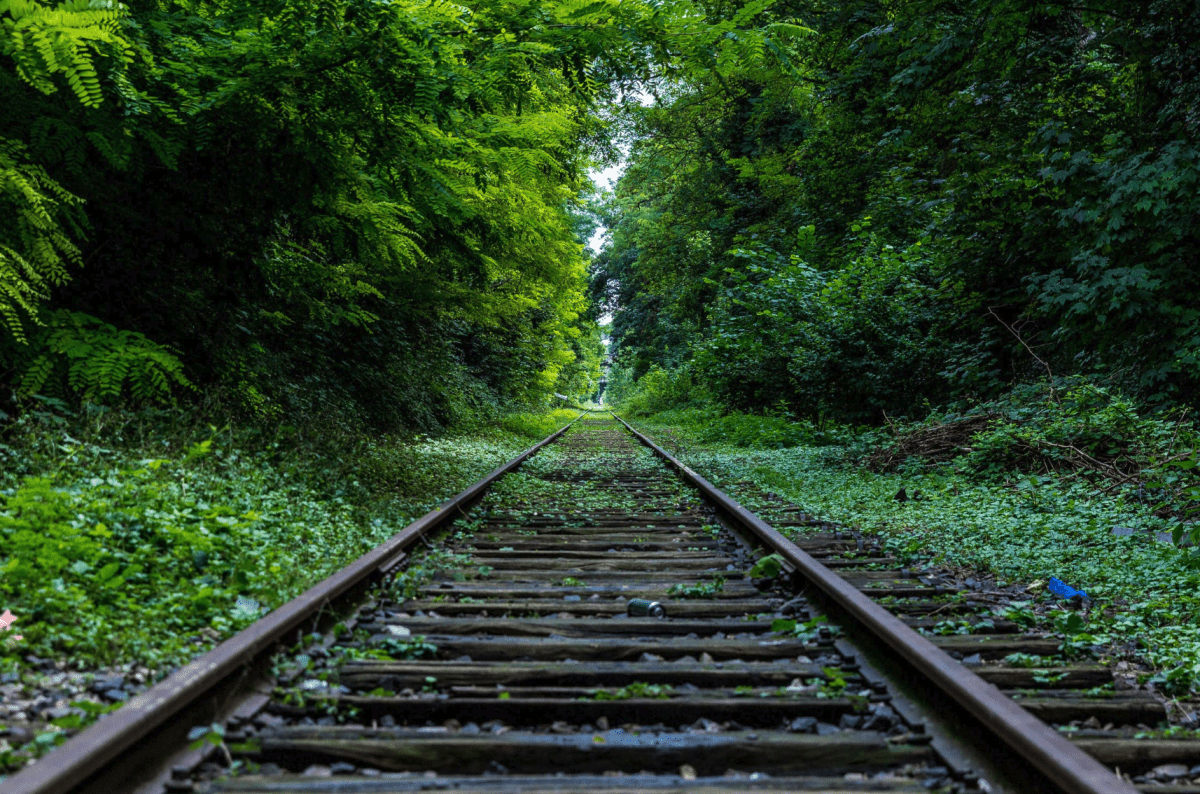
Our cities would likely be overgrown again within twenty or thirty years, coastal settlements would be swept away by the sea, and buildings would begin to crumble and collapse. The only thing that would remain of us would be the pollutants. Radioactivity, the lead content in the soil, the CO² levels in the air—it would take much longer to deal with our legacy! Weisman's conclusion, however, is: we don't necessarily have to disappear completely. A more conscious approach to our wonderful planet would be enough to preserve it for future generations.


