


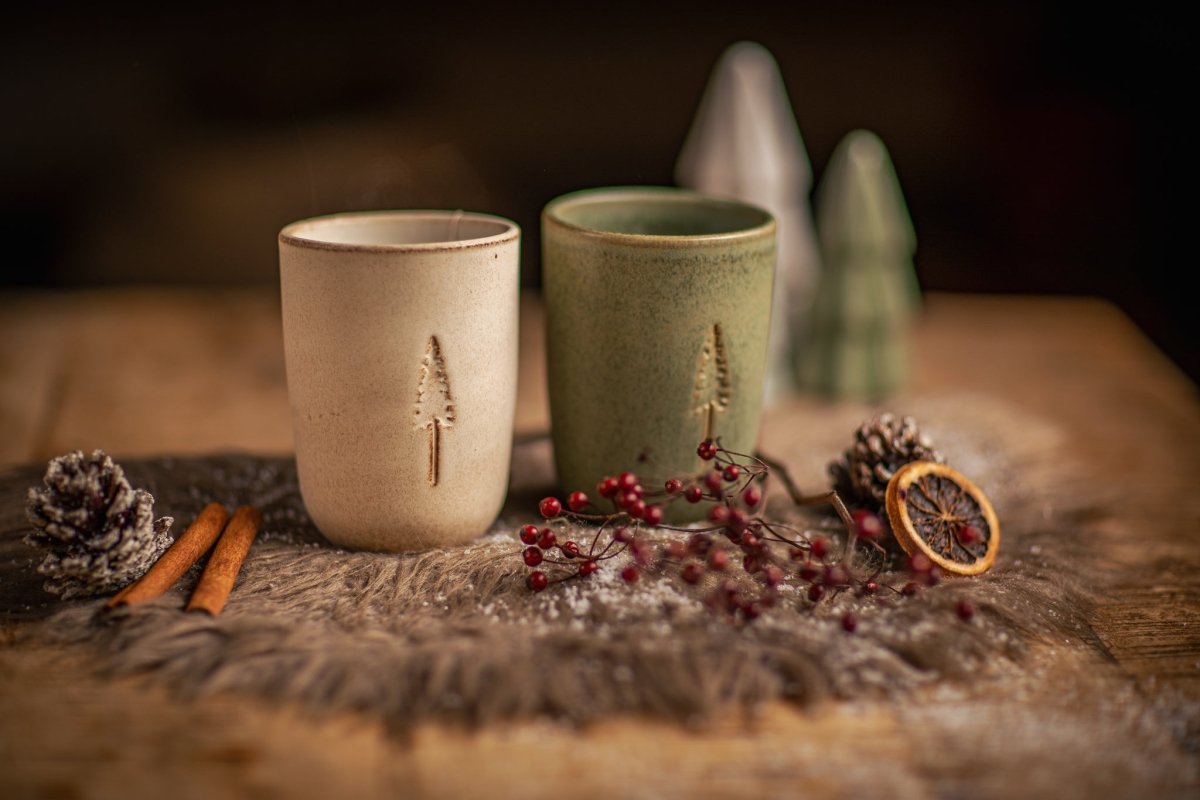
In our XMAS collection, we've now used ceramic for the first time for the NIKIN TreeMug . Reason enough to shed light on the manufacturing process and sustainability of ceramics.
Ceramic production: From mud to cup
To create a TreeMug or any other ceramic object, you need clay. Depending on the fineness or coarseness of the clay, the resulting ceramic pieces will be more or less delicate. The first steps involve mixing the clay with water and shaping it on a potter's wheel or using molds. The object then needs to dry – this can take several days, depending on its size.
 Image: Clay is shaped on a potter's wheel. (Image by Val do Sol)
Ceramic manufacturing process: Two firing stages at high temperature
The subsequent steps are the most complex – also in terms of energy consumption. The piece is first subjected to a so-called form firing, followed (after the glaze has been applied) by a so-called glaze firing. Both take place at temperatures of several hundred degrees Celsius, depending on the material.
Smaller workshops and individual ceramic artists use kilns heated by electricity. If the electricity comes from sustainable sources, the high-temperature firing poses little environmental concern. Mass-produced ceramics, on the other hand, are usually fired in large-capacity kilns powered by gas.

Image: The form firing ensures a stable shape of the ceramic products before the glaze is applied and fired. (Image by Val do Sol)
Glazes and their composition
Another, less considered factor regarding the ecological impact of ceramic firing is the composition of the glaze. Glazes, especially those made from inexpensive materials, contain harmful substances that may also be released into food and beverages. A good glaze, on the other hand, consists only of natural minerals that are mixed together and then heated.
Supply chains for ceramics
Ultimately, the supply chain is also crucial for the sustainability of ceramics. As always, the longer the journey, the higher the emissions. Global supply chains are still very common, especially in this sector. However, there are also high-quality ceramic objects "made in Europe," such as our TreeMug, produced in Portugal.
 Image: At Val do Sol in Portugal, the handmade products are refined with homemade glazes. (Image by Val do Sol)
Sustainable ceramics – what to look out for
Ceramic is a widely used material that—unlike glass or paper—isn't easily recycled. Reuse occurs by grinding up shards and then adding them to new clay mixtures. These shards stabilize the clay mixture and are therefore useful for everyday ceramic objects, but not suitable for fine porcelain. Therefore, those who value living as sustainably as possible when handling ceramics can consider the following:
- Buy ceramics made in Europe with the shortest possible supply chains and transparent manufacturing conditions.
- Make sure that waste products such as excess clay, heat and water are recycled during the ceramic production process.
- Treat the ceramic pieces carefully to ensure a long lifespan.
Our TreeMugs are manufactured by the Portuguese company Val do Sol Cerâmicas, which carries out all production steps in its own factory. By reusing heat, water, and clay, resource consumption is kept to a minimum, and the homemade glazes are blended from natural ingredients. This creates high-quality, long-lasting favorite products.

Image: Our TreeMug Ceramic – fairly manufactured in Europe and a real eye-catcher.
NIKIN is committed to local production with the smallest possible resource consumption, not just for ceramics, but for all its products. By supporting NIKIN, you become part of this ecological movement and also plant trees. Together we're making the world greener – #treebytree.


